There are fungi in the Ophiocordyceps group that infect certain ants and eventually alter their behavior.
The infected ant leaves its normal routine, climbs onto vegetation, and clamps its jaws down.
Then it dies.
And the fungus grows out of its body so it can release spores and infect more ants.
So basically—
the fungus uses the ant as transportation, decides where it would like the body parked, kills it there, and then uses the corpse to reproduce.
🍄
Nature really looked at zombies and said:
I can do that.
Anyway.
Happy October.
You’re welcome for the unnecessary information. 🖤
Until next time,
-Destiny
P.S. If you knew an animal had been infected by something that could control its behavior, would you want to know how it worked—or would you rather remain blissfully ignorant?
Some weeks give you little moments worth remembering.
And some weeks leave you sitting there wondering what the actual fuck just happened.
This was one of those weeks.
Sunday Things is going to look a little different this time. Not because I planned it that way, but because I genuinely don’t remember enough of this week to tell you about it the way I normally would.
And honestly?
I’m not entirely sure I want to remember it.
💭 The Days I Can’t Account For
Monday morning started with an asthma attack.
I woke up struggling to breathe, called off work, and made an appointment with my doctor. She prescribed a steroid and a new medication called Singulair to help manage my asthma and allergies, particularly the nighttime symptoms that were contributing to my morning attacks.
I took my first dose Monday night.
Tuesday morning?
I felt phenomenal.
I could breathe. I wasn’t waking up fighting for air. I genuinely thought we’d finally found something that was going to help me.
Oh, how wrong I was.
Tuesday night, I barely slept. I was waking up every two hours, and my period had decided to make an appearance with absolutely no consideration for anything else happening in my life.
By Wednesday, I was exhausted.
I forced myself to go to work because I needed to complete a recertification, but I spent most of the morning lying on the floor with my heating pad until I absolutely had to get up.
I eventually told my manager I needed to leave.
And that’s when things got really fucking weird.
I got home around 9 AM and settled into my recliner.
What felt like fifteen minutes later, my boyfriend’s mom was walking through the door.
It was 3:30 in the afternoon.
Six and a half hours had passed.
I hadn’t been sleeping.
I hadn’t gone anywhere.
I’d just been sitting there.
And I couldn’t account for the time.
Apparently, I video-called my sister five different times that day. I remember two of those calls, and I couldn’t tell you what we talked about.
I do remember looking at my own face on the screen during one of them.
And watching it turn into a skeleton.
Not a filter.
Not something I was imagining for fun.
I was genuinely watching my face change in front of me.
And somehow, in my completely exhausted state, I decided I was probably just tired and needed to get off the phone.
Looking back, that’s terrifying.
At the time, I was too confused to recognize just how wrong things had gotten.
I was losing track of time, forgetting conversations, and barely functioning. I was so out of it that I wasn’t even properly taking care of myself while dealing with an incredibly heavy period.
That night, I couldn’t sleep.
Again.
At 3:30 in the morning, I messaged my doctor because I genuinely didn’t understand what was happening to me.
I’d slept approximately one hour in two days.
And when I finally did fall asleep?
I had one of the worst night terrors I’ve ever experienced.
I woke up absolutely terrified, ran straight into my boyfriend’s arms, and begged him not to go to work.
I was shaking. My heart was racing. I felt like I couldn’t catch my breath.
I was scared.
Really fucking scared.
Thursday morning, I contacted my doctor’s office.
I explained what had been happening, and they wanted me to come in.
Great. When?
October 20.
Almost two weeks away.
I made the appointment, but I also made it very clear that I wasn’t taking another dose of Singulair while waiting.
I’d learned that the medication carries an FDA boxed warning for serious mental health side effects, and what I was experiencing was frightening enough that I wasn’t willing to continue taking it.
The worsening depression, anxiety, insomnia, confusion, and hallucinations were more than I could handle.
And I still had no idea how much of my week I’d lost.
🖤 Finding My Way Back
Friday morning, I slept straight through my alarm.
Apparently, my boyfriend woke me up to turn it off.
I don’t remember that.
Apparently, I’d also promised my mom that I’d take my niece to school.
Don’t remember that either.
Needless to say, J was a little late. 😅
Thankfully, my manager was incredibly understanding about everything happening.
I finally got myself into the shower, changed out of the clothes I’d practically been living in all week, and started feeling a little more human.
And then I called my sister.
Immediately, I heard two familiar little voices yelling:
“BLAHBLAH, UP!”
Well.
There went my child-free weekend. 😂
I’d originally planned to attend a concert Saturday and have a date night with my boyfriend Sunday.
But after the week I’d had, I decided the concert wasn’t happening.
And since I was feeling considerably better than I had been, I went and picked up Doodoo and Pooh Boy.
My boyfriend’s mom was off work Friday, so thankfully, I had plenty of help.
Saturday has been wonderfully uneventful.
We’ve stayed inside in our pajamas.
The boys have played.
I’ve occupied my usual spot on the couch.
And I somehow convinced both toddlers to take a nap simply because I wanted a nap.
Pooh Boy slept in the bedroom, and Doodoo curled up with me on the couch.
No big adventures.
No running around.
No plans.
Just a quiet day at home.
And after everything that happened this week?
I’ll take it.
I usually end Sunday Things with some kind of reflection.
Something I’ve learned. Something I’m grateful for. Some little moment that made the chaos worthwhile.
But I don’t have one of those this week.
I don’t think every awful experience needs to become a lesson.
Sometimes things are just awful.
And this week was.
There are entire conversations I don’t remember having. Hours I can’t account for. Moments that frightened me more than I realized at the time.
I’m still not feeling completely like myself, but I’m getting a little better every day.
Why Does the Human Brain Think Something Is There?
I need to know why my brain becomes an asshole after dark.
Because during the day, I can look across a room and see:
A coat.
A pile of laundry.
A chair.
Completely normal things.
Turn the lights off?
Suddenly there is a whole-ass person standing in the corner of my bedroom.
My stomach drops.
My heart does that horrible little oh fuck thing.
I turn the light on.
Coat.
Of course it’s a coat.
It was always a coat.
But for approximately half a second, my brain was completely prepared to accept that someone had broken into my house just to stand silently in the corner and stare at me.
Rude.
And I know I’m not the only person whose brain does this.
A tree has a face.
A car looks angry.
An electrical outlet looks shocked.
Something moves in your peripheral vision and you turn around because you could have sworn somebody just walked past you.
Sometimes there isn’t even anything to see.
You just suddenly get that horrible feeling that—
someone is there.
So naturally, I had questions.
Why does the human brain keep finding people who aren’t there?
Why does darkness make everything creepier?
Why can two dots and a line suddenly become a face?
And, most importantly:
Why is my laundry trying to kill me at 3:00 in the morning?
Down the rabbit hole I went.
🕳️ First of all: apparently, your brain is guessing.
I always kind of thought vision worked like a camera.
Your eyes see something.
Your brain gets the picture.
Done.
Apparently—
no.
Perception is much messier than that.
Your brain is constantly taking information from your senses and trying to figure out what that information probably means.
Most of the time, it happens so quickly that we never notice.
You don’t stare at four wooden legs, a flat surface and a backrest while consciously calculating:
Hmm.
Interesting.
I believe this may be…
a chair.
You just see a chair.
Your brain already handled the rest.
The problem starts when the information coming in isn’t very good.
Maybe it’s dark.
Maybe you only saw something for a second.
Maybe half of it is hidden.
Maybe it’s sitting at the edge of your vision.
Your brain still wants an answer.
So sometimes it gives you one before it has enough information.
PERSON.
…
Never mind.
Lamp.
And suddenly my nighttime stupidity makes considerably more sense.
🕳️ Apparently, everything has a face.
There is a word for one particularly weird version of this:
pareidolia.
Pareidolia is basically what happens when we recognize a familiar or meaningful pattern in something that doesn’t actually contain that thing.
And humans are really good at finding faces.
Clouds.
Trees.
Houses.
Food.
Cars.
Rock formations.
Outlets.
Toast.
Apparently our standards are embarrassingly low.
Two vaguely eye-shaped things and something underneath them?
Good enough.
Congratulations. You’re a face now.
😂
The weird part is that our brains actually respond to these fake faces.
In a 2020 study, researchers showed people ordinary objects containing face-like patterns. The brain initially represented those illusory faces similarly to real faces before very quickly sorting them back into the “actually, that’s an object” category.
Which means there are tiny moments when your brain essentially does this:
HUMAN.
…
toaster.
And I absolutely love that.
There is also an actual neuroscience study called “Seeing Jesus in Toast.”
I’m not making that up.
Researchers showed people visual noise and asked them to search for faces. Participants sometimes reported seeing faces even though there were none actually hidden in the images, and activity in a brain region involved in face processing increased when they did.
So apparently if you give the human brain enough visual nonsense, eventually it will manufacture a person.
Excellent.
🕳️ Turn off the lights and suddenly your coat is a murderer.
Here’s where this becomes October appropriate.
😂
During the afternoon, that pile of laundry in your room is:
laundry I should probably put away.
At 3:00 in the morning?
WHO THE FUCK IS SITTING IN MY CHAIR?
Nothing about the laundry changed.
Your information did.
When there isn’t much light, you lose detail.
Shapes get less clear.
Edges blend together.
Shadows hide parts of objects.
Your brain is trying to identify something while working with less information.
So it fills in some blanks.
And sometimes the answer it lands on is—
person.
It also explains why watching a horror movie can suddenly make your perfectly ordinary house feel suspicious.
The refrigerator makes a noise.
Normally:
Refrigerator.
After two hours of watching people get murdered because they insisted on investigating strange noises:
Well. This is how I die.
Tree branch scratches the window?
Murderer.
Cat knocks something over?
Demon.
Boyfriend rolls over in bed?
Possessed.
😂
Nothing necessarily changed inside the house.
You did.
You’re paying attention to different things.
You’re expecting different possibilities.
And now every weird shadow gets an audition for the role of whatever horrible thing you just watched.
🕳️ Okay…but what if you don’t see anything?
And then I found the part I really didn’t like.
Because sometimes people don’t mistake anything for a person.
There’s no coat.
No shadow.
No face.
Nothing moves.
They simply feel like—
someone is there.
Researchers call this a felt presence or sensed presence.
It refers to the experience of feeling that another person or being is nearby without clear sensory evidence that anyone is actually there.
And apparently this is a whole thing.
It has been reported in very different situations—including under psychologically or physically demanding conditions and alongside some neurological and psychiatric conditions—and researchers don’t think there is necessarily one explanation that accounts for every version of it.
It isn’t limited to people with a diagnosed condition either.
A 2024 study surveyed 10,447 people from the general population. About 1.6% reported experiencing a felt presence during the previous month. Poor sleep and loneliness were among the things associated with the experience in that sample.
Which is fascinating.
I hate it.
But fascinating.
Because apparently your brain doesn’t even need to bother making the coat look like a person.
Sometimes it can just quietly announce:
Someone is behind you.
And provide absolutely no further information.
Thanks.
Very helpful.
🕳️ So…is your brain lying to you?
Not exactly.
And I think this might be the part I find most interesting.
Your brain isn’t sitting inside your skull intentionally making shit up because it’s bored.
It’s interpreting.
Constantly.
The world doesn’t arrive in your head with helpful little labels attached.
Coat.
Tree.
Shadow.
Not a murderer.
Your senses give your brain information.
Your brain has to figure out what probably caused it.
Usually, that works so well that we don’t even realize it’s happening.
But sometimes?
The information is incomplete.
And the first answer is wrong.
That also doesn’t mean we can slap pareidolia onto every strange experience anyone has ever had and call the mystery solved.
Sometimes we don’t have enough information to know exactly what somebody saw, heard or experienced.
But we do know that the human brain is extremely good at finding recognizable patterns inside incomplete information.
Especially faces.
Especially people.
Especially things that seem important.
Which means the creepy part might not be that our brains occasionally get it wrong.
The creepy part might be realizing how much guessing they’re doing when they get it right.
🕳️ So about that person standing in your bedroom…
There probably wasn’t one.
The coat never moved.
The tree outside your window does not have a face.
Your electrical outlet isn’t horrified.
Your car is not pissed at you.
Probably.
😂
For that first split second, though, your brain was trying to answer a question before it had all the evidence:
What am I looking at?
And its first answer was:
Person.
Then you stopped.
Looked again.
Turned on the light.
And gave your brain enough information to change its mind.
Coat.
Just a coat.
Which means the next time something vaguely human-shaped is standing in the corner of my room at night, I now know exactly what I should do.
Turn on the light.
Not because something is there.
My brain just needs more information.
And honestly?
So do I.
Well.
This was supposed to be a fun little question about why coats turn into murderers after dark.
Instead I learned that my brain is constantly interpreting incomplete information, will recognize human faces in completely inanimate objects, and can apparently decide that another person is nearby without even showing me the imaginary person.
Excellent.
October is off to a great start.
Rabbit hole successfully entered. 🐇🕳️
Until next time,
— Destiny
P.S. What’s the creepiest thing your brain has ever turned into a person for half a second? 👀
Sources & Further Reading
For this one, I kept the sources fairly small because this isn’t History After Dark and nobody needs my entire neuroscience research trail. 😂 These were the strongest sources I used while trying to figure out why our brains insist on finding people in coats, toast and dark corners.
Susan G. Wardle et al. — “Rapid and Dynamic Processing of Face Pareidolia in the Human Brain.” Published in Nature Communications in 2020. This study looked at how quickly the brain responds to illusory faces in ordinary objects and found that those fake faces initially receive processing resembling that of actual faces before the brain rapidly distinguishes them as objects.
Jiangang Liu et al. — “Seeing Jesus in Toast: Neural and Behavioral Correlates of Face Pareidolia.” Published in Cortex in 2014. Researchers used visual noise to study what happens when people perceive faces that aren’t actually present and found involvement of the right fusiform face area during illusory face perception. Also still one of my favorite research-paper titles. 😂
Joseph M. Barnby et al. — “The Felt-Presence Experience: From Cognition to the Clinic.” A 2023 review examining felt presence—the experience of sensing another being nearby without clear sensory evidence—and the different neurological, psychological and environmental contexts in which it has been reported.
Sanne G. Brederoo et al. — “The Experience of Felt Presence in a General Population Sample.” Published in The British Journal of Psychiatry in 2024. The study surveyed 10,447 people and found that 1.6% reported a felt presence during the previous month, showing that the experience isn’t confined to unusual expedition stories or clinical populations.
I think one of the strangest things about grief is that you don’t always miss the huge moments first.
Sometimes you miss the stupid little things.
What flowers somebody hated.
How slowly they drank their wine.
The sound they thought was funny.
The person you loved is gone, but Tuesday still happens.
And I think that is really what this poem became about for me.
Not refusing to let someone go.
Not being unable to move on.
Just the quiet, stubborn way love can keep making room for someone who is no longer physically there.
Because there is a difference between accepting that someone died—
and deciding that death gets to erase them.
This is What the Dead Keep.
What the Dead Keep
Every night,
someone leaves flowers on a grave
whose name has long withered away.
Not roses.
She hated roses.
He remembers that.
Even now.
Even after rain has eaten the letters from the stone
and moss has filled what little remains.
He brings lilies.
Sometimes dahlias.
Once,
in the middle of winter,
he walked three miles through snow
with violets hidden beneath his coat
so the frost wouldn’t touch them.
By morning,
they were frozen anyway.
He came back the next night.
He always comes back.
The cemetery gate screams when he opens it.
He never oils the hinge.
She used to love that sound.
Said it made the place feel haunted.
He had laughed then.
“It’s a cemetery.”
She smiled.
“Exactly.”
Now,
he would give anything
to hear her laugh at him again.
So every night,
he kneels in the dirt.
Pulls weeds from around the stone.
Brushes dead leaves from her name.
Runs his thumb through the shallow grooves
as though touching the letters
might somehow still count
as touching her.
Sometimes he talks.
Nothing important.
The neighbor finally cut down that awful tree.
The roof leaks again.
He burned dinner on Tuesday.
The moon is full.
He tells her the ordinary things
because death already took everything else.
He refuses to let it have
Tuesday.
Sometimes,
he brings two glasses of wine.
Pours hers into the earth.
“You always drank too slowly.”
The soil turns dark.
He drinks alone.
Years pass.
The groundskeeper changes.
Then changes again.
Houses rise beyond the cemetery walls.
Children become old enough to have children.
People stop visiting the graves nearby.
Photographs fade.
Names disappear.
Stone forgets what flesh once was.
But every night,
flowers.
Fresh.
Carefully cut.
Placed beneath a name
no living person seems to recognize.
Eventually,
people begin telling stories.
A grieving husband.
A ghost.
A madman.
A lover who cannot let go.
They are wrong about one thing.
He did let go.
He let go of her hand
the night it became too cold to hold him back.
He let strangers carry her away.
Let them close the coffin.
Let dirt strike wood
one handful at a time.
He let go
because the living are forced
to do terrible things with their hands.
But love—
love was never buried.
So tonight,
he comes again.
Slower now.
His hands shake around a bundle of white lilies.
He lowers himself beside her
with more difficulty than he used to.
His knees sink into wet earth.
For a long time,
he says nothing.
Then he places the flowers down.
Straightens each stem.
Wipes a smear of mud from the stone.
And rests his forehead against her name.
“I’m tired, darling.”
The cemetery does not answer.
It never does.
He smiles anyway.
Small.
Almost embarrassed.
Like the young man who once stood on her doorstep
holding flowers
and trying desperately not to crush them.
“Tomorrow, then.”
He kisses two fingers
and presses them to the stone.
Then leaves.
The gate screams behind him.
Morning comes.
The lilies remain.
Then another night.
And another.
But no footsteps cross the cemetery.
No hands clear the leaves.
No voice complains about the weather.
For the first time in sixty-three years,
her grave
is alone.
Until spring.
When the groundskeeper finds something strange.
Two graves.
Side by side.
One stone so old
its name has nearly disappeared.
The other,
new.
And growing between them,
where no one remembers planting anything,
a cluster
of white lilies.
Between the Lines
This poem looks like a ghost story.
There’s an old cemetery.
A screaming gate.
A disappearing name.
A man who comes every night for sixty-three years.
Flowers growing between two graves at the end.
But I don’t actually think this is a poem about ghosts.
I think it’s about being remembered after the world has stopped remembering you.
The stone is failing.
Rain is eating the letters.
Moss is filling the grooves.
Eventually, nobody seems to know who the woman buried there even was.
But he does.
And not in some grand, romanticized way where she becomes perfect because she died.
He remembers that she hated roses.
That matters to me.
He doesn’t bring her the flower people are supposed to bring the dead.
He brings her flowers.
Lilies.
Dahlias.
Violets he tries to protect from the snow even though they freeze anyway.
He remembers her jokes.
Her habits.
The tiny things that made her a person.
Death gets the body.
Time gets the photograph.
Weather eventually gets the name carved into stone.
But he keeps the details.
“He refuses to let it have Tuesday.”
This might be my favorite part of the whole poem.
Because grief is usually written around the enormous things.
The funeral.
The final goodbye.
The empty side of the bed.
The anniversary.
But losing someone also means losing the person you would have told about Tuesday.
The roof leaked.
The neighbor finally cut down the tree.
You burned dinner.
Nothing important happened.
And you still would have told them.
He keeps bringing her the ordinary life she would have been part of.
Death already took the things he couldn’t stop it from taking.
He isn’t giving it the mundane stuff too.
Not Tuesday.
“A lover who cannot let go.”
That is what people eventually decide he is.
But they’re wrong.
He did let go.
Literally.
And I think this is probably the hardest part of the poem for me:
He let go
because the living are forced
to do terrible things with their hands.
There is something cruel about how physical death is for the people left behind.
Someone has to release the hand.
Someone has to let strangers take the body.
Someone has to close the coffin.
Someone has to leave the cemetery.
His continuing to love her afterward does not mean he failed to accept that she died.
He knows she is dead.
The poem never gives him an answer.
“The cemetery does not answer. It never does.”
He just doesn’t believe acceptance requires forgetting.
And neither do I.
“Tomorrow, then.”
By the time he comes for the last time, he is old.
His hands shake.
His knees hurt.
Everything around him has changed.
But he is still carrying white lilies.
Then, for a moment, he becomes that young man again—
standing on her doorstep with flowers and trying not to crush them.
I love that image because sixty-three years disappear for a second.
Then he says:
“Tomorrow, then.”
And there isn’t one.
Not for him.
That hurts me more than some huge final goodbye ever could.
Because most people don’t know when something is the last time.
The last conversation.
The last ordinary Tuesday.
The last see you tomorrow.
Sometimes you only realize afterward that tomorrow belonged to somebody else.
And then there are the lilies.
I deliberately don’t explain them.
Maybe somebody planted them.
Maybe they grew there naturally.
Maybe it is coincidence.
Maybe it is something else.
I don’t really care.
For sixty-three years, he carried flowers to her.
Then he dies.
And in spring, flowers grow between them.
Not on her grave.
Not on his.
Between.
I don’t need that ending to prove an afterlife.
I just like the idea that after all those years spent crossing the distance between the living and the dead, the poem ends with something quietly growing in the space that separated them.
What the Dead Keep
Maybe that’s what we really keep when somebody dies.
Not the person.
We don’t get that choice.
We keep fragments.
Habits.
Private jokes.
Things they hated.
Things they would have laughed at.
The stupid ordinary details that don’t sound important until suddenly they are all you have left.
The stone eventually forgets her.
The world mostly does too.
He doesn’t.
And then eventually, he is gone as well.
But for one spring—
white lilies grow between them.
Maybe nobody visiting that cemetery knows why.
Maybe nobody remembers either of them.
But something is still there.
And maybe that is as close as any of us get to staying.
Until next time,
— Destiny
P.S. If someone you loved were gone, what ordinary little thing about them do you think you’d be most afraid of forgetting? 🖤
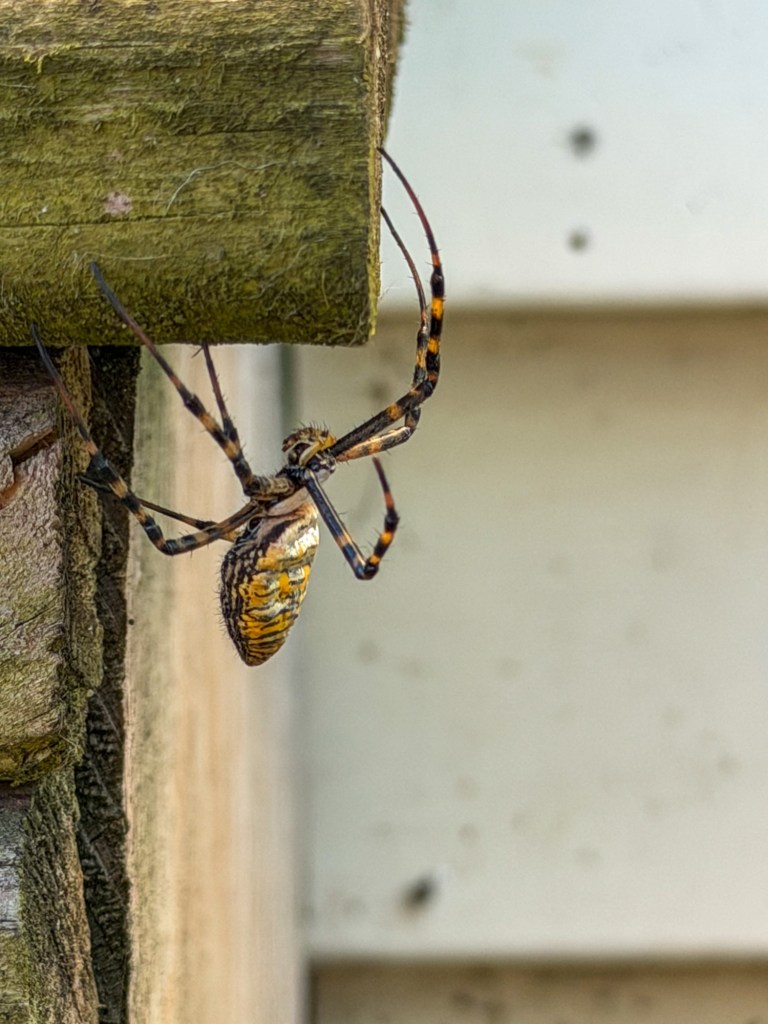
My entire body goes into panic mode before the logical part of my brain has even had time to remind me that I am significantly larger than the thing currently ruining my day.
So naturally—
I took her picture.
😂
And somehow, out of all the pictures I could have taken of a spider I desperately wanted nowhere near me…
she decided to pose.
One leg stretched upward.
The others perfectly angled.
Body turned just enough to show off every stripe, every little patch of color, every horrifying hair on those ridiculously long legs.
She looks like she knew exactly where the camera was.
Which feels unnecessarily confident for something that almost made me leave my own backyard.
But then I looked at the photo.
Actually looked.
And—
damn it.
She’s beautiful.
I hate that.
😂
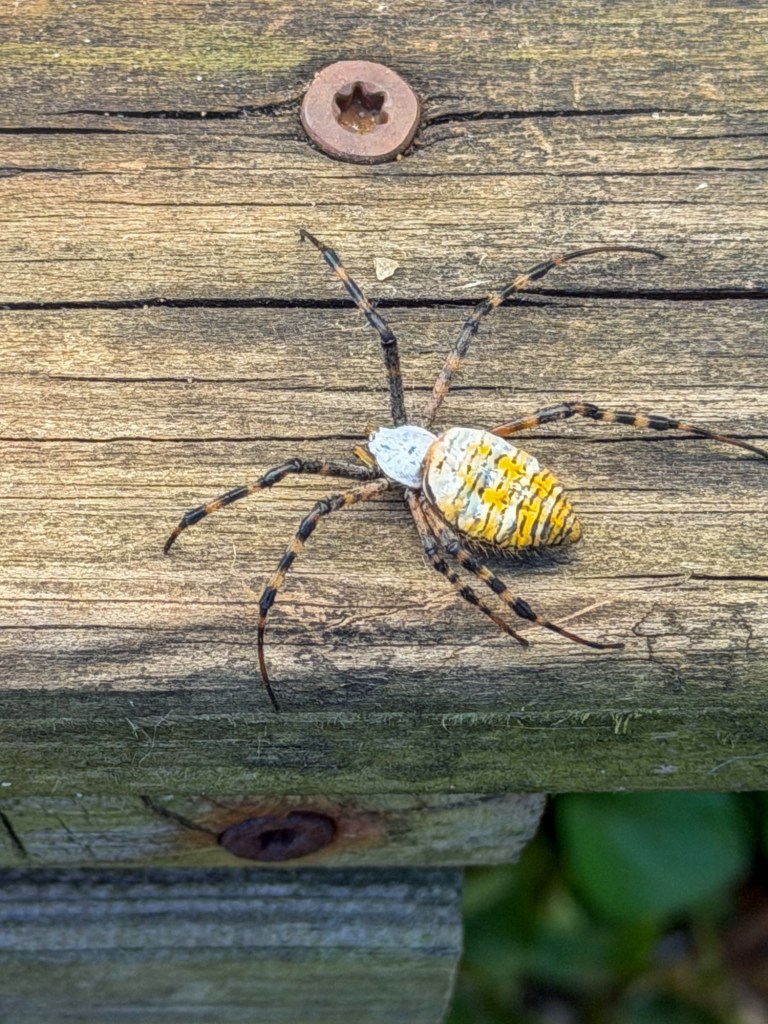
Her legs aren’t just black.
They’re banded with orange and yellow.
Her abdomen has this complicated pattern running across it that I never would have noticed if I hadn’t gotten close enough to take the picture.
Even the little hairs on her legs—the part I find particularly offensive—catch the light.
There is so much detail packed into something my brain normally reduces to one word:
SPIDER.
Danger.
Nope.
Get it away from me.
And I think that’s the interesting part.
Looking closer didn’t make me less afraid of her.
I didn’t take the picture and suddenly become a spider person.
Absolutely not.
I still wanted distance.
A lot of it.
Preferably several zip codes.
But for a minute, fear stopped being the only thing I could see.
There was fear.
And there was color.
Pattern.
Texture.
Structure.
Beauty.
All occupying the exact same frame.
I think sometimes we assume appreciating something means we have to stop being afraid of it.
Maybe we don’t.
Maybe two things can be true at once.
She scared the absolute shit out of me.
And—
she is gorgeous.
I can admit that.
From over here.
Very, very far away.
😂🖤
Maybe looking closer isn’t always about discovering that something wasn’t scary after all.
Sometimes it’s just about noticing that fear wasn’t the whole story.
Until next time,
-Destiny
P.S. Have you ever found something beautiful even though it scared you?
This week started with me getting completely ready for work—
and then immediately throwing up my dinner from the night before.
Cool.
Fantastic.
Love that for me.
😂
On top of that, my body had apparently decided one problem wasn’t enough, so I was dealing with something else incredibly uncomfortable too.
I took the day off.
Took a long soak.
And planted myself in the recliner with Scream Queens for basically the entire day.
Honestly?
There are worse ways to spend a sick day.
There are also significantly better ways.
But we survived.
😂
Sissy called and asked me to come over because she missed me, which broke my heart a little, but considering I had spent the morning puking, I decided maybe bringing whatever the hell was happening with me around a house full of children was a bad idea.
Look at me.
Making responsible adult decisions.
Gross.
One of my kiddos from work also called me that day because it was his last day with us.
He’s moving on to a different school, which is so exciting for him, but apparently he asked for me as soon as he got there that morning.
😭
I had already been upset that I wasn’t going to get to tell him goodbye or wish him luck.
Then he called me.
And told me he was going to miss me.
Y’all.
My whole fucking heart.
I better get updates.
That’s all I’m saying.
Later, I picked my oldest niece up from school.
She started telling me about a book she wanted from the book fair.
Her grades are up.
Her work is turned in.
She’s doing really well.
So after figuring out what she still needed for it, I stopped at the ATM and made sure she had enough.
It’s a book.
She’s doing well in school.
Of course I’m going to help her buy the damn book.
😂
And speaking of spending money—
apparently I’m going to see Scene Queen next weekend.
My friend’s daughter called me and asked if I would take her.
Her dad overheard the conversation and basically went:
I’ll buy the tickets.
Well.
Okay then.
😂
This will be our second outing together in about a month, though, which means now I need to plan two things with her brother.
I don’t make the rules.
Actually, I do.
And apparently the rule is:
EVERYBODY GETS ACTIVITIES.
🕷️ Nature and I Are No Longer Speaking
Tuesday.
Oh, Tuesday.
I got off work and Doodoo called me.
“BlahBlah, up!”
Say less, baby.
I’m coming.
Naturally, Pooh Boy also decided he was coming home with me.
Then Sissy very politely asked:
“NeeNee, can I come to your house for just a little bit?”
Of course.
“Can I come home after?”
Absolutely.
😂
So now I have three children.
We spent about two and a half hours outside.
Everything was fine.
Until I walked toward the back steps to grab bug spray and saw something move.
I looked down.
Jumped backward.
And immediately thought:
What the FUCK kind of spider-looking shit is THAT!?
Absolutely.
Fucking.
Not.
😭
I called my sister.
Turns out this giant nightmare creature was an orb-weaving garden spider.
A female.
And apparently the reason I had never seen one this terrifying before is because I had only noticed the smaller ones.
Cool.
New fear unlocked.
Except my sister wanted her.
At her house.
And asked me to catch her.
…
I need everyone to understand something.
I have arachnophobia.
Not “ew, spiders are gross.”
Not “haha, get it away from me.”
My heart was racing.
My palms were sweating.
I couldn’t breathe properly.
By the time it was over, my entire body was shaking so badly that I had to squat down and remind myself how the fuck to breathe.
This is not a game for me.
😂😭
And yet—
I caught that big-ass spider.
Why?
Because my sister wanted it.
If anybody ever questions how much I love that woman again, I would like this entered into evidence.
Because if ANYBODY ELSE asked me to catch a spider that damn big for them, I would’ve told them they had lost their fucking mind.
Afterward, while trying to recover from my near-death experience, I told my sister:
“I’m glad you didn’t record that.”
…
She recorded it.
SHE RECORDED THE WHOLE FUCKING THING.
😭😂
Apparently she was laughing so hard while watching me fight for my life that she gave herself a migraine.
Glad one of us had fun.
We delivered the spider to her new home.
My sister put her on the mailbox.
The spider was pissed.
A praying mantis was offered as tribute.
The spider declined.
The praying mantis took one look at her and basically said:
Actually, I have somewhere else to be.
Same, little buddy.
Same.
By the time I got home, I could still feel imaginary spiders crawling all over my body.
I sat in the recliner repeating:
I don’t have spiders on me.
Ate dinner.
I don’t have spiders on me.
Boyfriend said it was time for bed.
Absolutely not.
I am not taking these imaginary spiders into my sheets.
I took a shower.
The spiders finally went away.
😮💨
Nature and I were officially done.
Or so I thought.
🍀 Apparently Nature Felt Bad
Wednesday morning, I was walking back from breakfast when something on the ground caught my eye.
I stopped.
Looked down.
And—
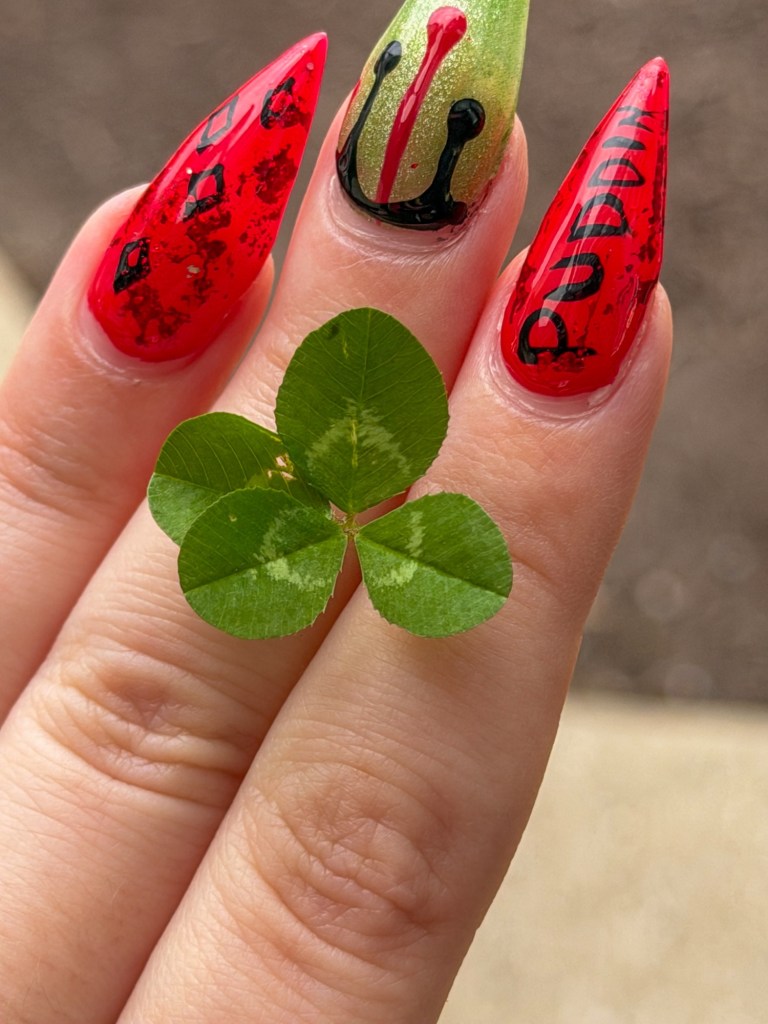
A FOUR-LEAF CLOVER.
Y’ALL.
I have never found one before.
I am in my 30s.
I have looked.
Nothing.
I actually already own a five-leaf clover that a friend found in my front yard and gave me, but I had never found a four-leaf one myself.
Until now.
So Tuesday, nature gave me a giant nightmare spider.
Wednesday, nature gave me my first four-leaf clover.
…
Fine.
Apology accepted.
But nature is still on thin fucking ice.
😂🍀
💭 A Thought I’ve Been Carrying
I said no this week.
Nothing dramatic.
Nobody was mad at me.
Nobody’s feelings were hurt.
My sister asked if we wanted the kids, and I said:
Absolutely not.
😂
I love those babies more than anything.
If Doodoo calls me and says, “BlahBlah, up!” nine times out of ten, I’m already looking for my shoes.
But Wednesday?
I wanted to go home.
Sit on my couch.
Have absolutely nobody need anything from me.
And do nothing.
So that’s what I did.
And I’ve been thinking about that more than I probably should.
Because sometimes I think we accidentally convince ourselves that loving people means always being available to them.
That if we can show up, we should.
That saying no means we’re letting somebody down.
But I don’t think that’s true.
Sometimes loving the people in my life looks like dropping everything when they need me.
Sometimes it looks like three kids taking over my house for an entire weekend.
And sometimes it looks like:
Not today. I’ll see you tomorrow.
😂
I don’t love them any less on the days I choose myself.
And considering I spent basically the entire weekend being climbed on, cried at, cuddled, pooped near, asked for snacks, and informed that somebody had, in fact, shit—
I think taking Wednesday off was an excellent fucking decision.
😂
😂 This Week’s “Well…That Happened.”
Honestly?
There were options.
At work, we started working on a new routine with one of my kiddos.
It has been an adjustment.
For both of us.
😂
There were some rough moments.
There were also some really good ones.
He sat longer than I expected him to.
We worked on communication.
He used his device more.
And at one point, he managed to communicate basically:
Destiny. Frustrated. Bathroom.
…
Sir.
Correct.
You read the room beautifully.
😂
Progress is progress.
I’ll take it.
Then I got my flu shot after work Thursday.
I walked up to a group of nurses, held out my paperwork and said:
“Who wants to poke me?”
I have never seen that many nurses look at me that quickly in my life.
😂
A couple smiled.
Two raised their hands.
One went:
“Get over here!”
DAMN.
Okay.
Apparently everybody wants a turn.
I got my shot and received my annual $5 Starbucks gift card.
Which means I now have four of those things sitting in my wallet because I don’t drink coffee and apparently refuse to give them away.
I posted them on Facebook.
Several people immediately volunteered to take them off my hands.
Excuse me?
I got poked for those.
They’re mine.
I don’t know what I’m eventually going to do with $20 worth of Starbucks gift cards.
But that’s not the point.
😂
Thursday evening also gave me the perfect start to October.
I thought I was going to have the house to myself for a while.
Boyfriend was supposed to work late.
Kids were elsewhere.
I was going to shower, get comfortable, and watch whatever the hell I wanted.
Then he walked through the door.
…
Oh.
There goes my remote.
😂
Except he wanted to watch a horror movie I’d been wanting to see too.
So never mind.
You may stay.
We watched Monkey’s Magic Merry Go Round, and y’all—
I am not spoiling it.
Just know that it was weird.
Creepy.
Completely unhinged.
And somehow exactly what I wanted from the first horror movie of October.
Perfect.
Friday night, I had all three kids again.
There were Dino nuggets.
Cookies.
Baths.
Tears.
Children passing out one by one.
And one very important discovery:
the milk was BAD.
Sissy took one sip and immediately went:
“NeeNee, what is wrong with this milk?”
Nothing. It’s the same milk Mommy buys.
“It tastes sour.”
…
Excuse me?
Boyfriend brought me the jug.
It was swollen.
It hissed when I opened it.
There was stuff around the rim.
It smelled like death.
Absolutely the fuck not.
🤢
I looked at him.
He looked at me.
I looked at the milk.
I looked back at him.
You gave this to her!?
Sir.
Straight to jail.
😂
Sissy got juice.
Then she called her mom.
At one point, while trying to watch YouTube at the same time, she told my sister:
“Mommy, I can’t hear my YouTube.”
My sister apparently asked if she wanted to get off the phone.
“No, I think you just need to quiet down is all.”
😭😭😭
My sister MUTED HERSELF.
Five minutes later, Sissy decided she was finished with the conversation.
Absolutely ruthless.
❤️ This Week’s Gratitude
Saturday was a birthday party.
And somehow, I think my gratitude this week is just—
getting to be part of all this.
The chaos.
The little voices.
The ridiculous conversations.
The fact that Doodoo can be completely inconsolable, and I can ask:
“Do you hear that?”
“Yeah.”
“What is it?”
“I don’t know.”
“Do you see that?”
“Yeah.”
“What is it?”
“I don’t know.”
And by the time we’re finished, he’s calm enough to tell me where he got hurt.
The fact that Sissy and I apparently become professional athletes the second a piñata breaks.
Because when that candy hit the ground?
Y’ALL.
We went IN.
😂
I was on my hands and knees.
Another adult was on the ground with us.
Arms and legs were being used to drag candy into our territory.
There was no dignity.
There was only victory.
Sissy walked away with one bag practically bursting at the seams and another more than halfway full.
We won piñata.
I don’t care if that’s not technically a thing.
We won.
😂
And then there are the tiny moments.
The boys crying because Uncle came home and they both wanted him.
Doodoo choosing Finding Nemo over CaseOh at dinner.
Pooh Boy waking up Sunday morning yelling:
“Guncle!”
Doodoo climbing over me and lightly smacking Uncle in the face:
“Uncle! Wake wake!”
😂
And this morning, after breakfast, Doodoo crawled into my lap.
I smelled something suspicious.
Did you poop?
“No. I farted.”
Okay, well, your ass stinks, boy.
A few minutes later:
“BlahBlah?”
Yeah?
“I shit!”
…
You shit!?
“Yup.”
Great.
Beautiful.
This is the life I am grateful for.
😂
And now it’s Sunday night.
I took Doodoo home.
Cleaned the living room.
Finished laundry.
Finally went through a giant pile of clothes I have been ignoring for longer than I’m willing to admit.
I am not discussing the rest of the laundry situation because my boyfriend managed to piss my entire soul off over it today.
His clothes eventually ended up in a pile beside him.
Handle your business, sir.
😂
Dinner is still frozen.
This post is late.
Again.
And I think I may officially have to admit that Sunday Things and its current posting time are no longer compatible with my actual Sundays.
We’ll figure that out later.
I’m also coughing enough that I decided not to visit my friend and her new baby today.
😭
I am dying to meet him.
But tiny brand-new humans do not need whatever bullshit my immune system may or may not be trying to pull right now.
So I’ll wait.
Impatiently.
This week started with me sick in a recliner.
Somewhere in the middle, I caught a spider despite every cell in my body screaming ABSOLUTELY FUCKING NOT, found my first four-leaf clover, watched a creepy movie, survived another week of tiny-human chaos, won a piñata war, and was informed very matter-of-factly:
“I shit.”
And now I’m sitting here tired.
Possibly getting sick.
Behind on dinner.
Behind on this post.
And surrounded by evidence that people live here.
Honestly?
I keep saying it lately, but I still mean it:
I love my little life.
It’s loud.
It’s weird.
Sometimes it has giant spiders.
Sometimes it gives me four-leaf clovers the next morning as an apology.
And apparently sometimes the milk hisses.
But it’s mine.
And that’s a pretty damn good life.
Until next time,
—Destiny
P.S. What’s one thing from your week that made you think, “Well…that definitely wasn’t on my bingo card”? 😂
The Dead, the Blood-Drinkers, and the Monsters We Made
Welcome to History After Dark. The kind of history that didn’t quite make it into your textbooks.
When you hear the word vampire, chances are your brain does not immediately go:
fish.
Fair.
Mine doesn’t either.
We think coffins.
Fangs.
Blood.
People with questionable sleeping schedules and an unhealthy relationship with necks.
The ocean seems like an entirely different category of nightmare.
Except apparently humans have spent centuries looking at the water and deciding:
Nope. Vampires live there too.
Sometimes we imagined the dead climbing back out of it.
Sometimes nature created an animal that literally attaches itself to another creature and drinks its blood.
And sometimes—
we saw something enormous swimming beneath a boat, had absolutely no idea what the hell we were looking at, and decided that Vampire of the Ocean sounded reasonable.
Those are not the same story.
But somehow?
They all lead back to the water.
The Women Who Came Back
Let’s start with the rusalka.
And before we turn her into some generic evil mermaid—
don’t.
Rusalka traditions vary considerably across Slavic regions, which means there isn’t one tidy little description we can slap onto all of them and call it finished.
In many traditions, though, rusalki were associated with water and with the dead.
Some accounts described them as the spirits of drowned women.
Others connected them with young women who died by suicide, people who suffered what communities considered an “unclean” death, or even dead children.
They might appear beautiful.
Young.
Long-haired.
Sitting beside rivers or lakes.
Which sounds lovely right up until the part where some stories have them luring men toward the water, pulling them beneath it, or inviting them into dances that ended with the victim being tickled to death.
Yes.
Tickled.
To death.
Apparently drowning was not dramatic enough.
But rusalki matter here for a reason beyond being creepy.
They represent one of the oldest fears humans have attached to water:
what if the people it takes don’t stay gone?
A drowning already leaves questions.
Sometimes there is no body.
No grave.
No final moment anyone witnesses.
The person simply disappears beneath the surface.
And folklore has always been very good at filling empty spaces.
The Man With Seaweed for a Head
Norway had its own version of the dead refusing to stay politely dead.
The draug—or draugen—was originally a broader kind of revenant: a dead person who returned to trouble the living.
Later Norwegian folklore tied the creature much more closely to the sea.
The draug became the ghost of someone who had drowned and never received a proper Christian burial.
Seeing or hearing one could supposedly warn that somebody else was going to die.
And in some stories?
It did more than warn you.
It tried to drag you into the sea with it.
Descriptions could get wonderfully horrible.
A fisherman’s clothes.
A half-boat.
And instead of a normal head—
a tangled mass of seaweed.
Because apparently Scandinavian folklore looked at a drowned ghost and thought:
You know what would improve this?
Kelp.
Neither the rusalka nor the draug is a vampire in the neat Dracula sense.
They aren’t necessarily running around looking for blood.
But they belong to the same much older family of fears:
the restless dead.
The thing that should have crossed from living to dead—
but didn’t stay there.
And then nature went ahead and created something much closer to an actual aquatic vampire.
The One That Actually Drinks Blood
Meet the sea lamprey.
Do not be fooled by the eel-looking body.
It is not an eel.
And the mouth is where things get rude.
Sea lampreys don’t have jaws like most fish.
Instead, they have a round sucking disc filled with sharp, horn-like teeth and a rasping tongue.
They attach themselves to another fish.
Hold on.
Rasp through the scales and skin.
And then feed on the victim’s blood and other body fluids.
They also produce a substance that helps prevent the blood from clotting while they eat.
So if you were waiting for one creature in this article to earn the vampire title honestly—
congratulations.
We found it.
Sea lampreys are native to the Atlantic Ocean, where they evolved alongside their hosts. In the Great Lakes, however, they became invasive and devastated important fish populations after spreading through shipping canals during the twentieth century. The Great Lakes Fishery Commission still maintains a major control program because of the damage they can cause.
And because apparently one genuine aquatic blood-drinker wasn’t enough—
there are also leeches.
Some blood-feeding leeches slice or pierce the skin and use anticoagulants to keep blood flowing while they feed.
The fun twist?
The exact ability that makes them disgusting to most of us is also why medicinal leeches still have a place in modern reconstructive medicine.
They can help relieve pooled blood after procedures such as finger reattachments and skin grafts.
So yes.
Sometimes the vampire helps put your finger back on.
History and biology are weird.
The Vampire That Wasn’t a Vampire
And now we get to my favorite part.
Because in the nineteenth century, people started calling something a vampire that—
as far as blood-drinking goes—
was innocent.
In 1823, American naturalist Samuel L. Mitchill examined an enormous ray captured near Delaware Bay.
The animal entered scientific literature under the name:
Cephalopterus vampyrus.
The Vampire of the Ocean.
Today, that old scientific name is treated as a synonym of Mobula birostris, the giant oceanic manta ray.
And manta rays do not suck blood.
They do not hunt sailors.
They are not lurking beneath ships waiting to drag screaming fishermen into the abyss.
But imagine seeing one in the early nineteenth century without the benefit of marine biology documentaries.
A massive dark body.
Enormous wing-like fins.
Strange projections around the head.
Something capable of moving with tremendous force through water you cannot see through.
People called them devil-fish.
Mitchill gave one a vampire name.
And humans did what humans have always done when something in the ocean looked enormous and unfamiliar.
We added a monster.
Devil-Fishing
A few decades later, South Carolina planter and sportsman William Elliott wrote at length about hunting these enormous rays in Carolina Sports by Land and Water.
He called them devil-fish.
He also repeated Mitchill’s “Vampire of the Ocean” name, connecting it in part with the creature’s broad, bat-like “wings.”
Elliott described hunting parties going out in small boats armed with harpoons, rope, and lances.
Once struck, a giant ray could tow the boat across the water at terrifying speed.
In one account, Elliott described being carried roughly twenty-five miles over the course of the chase.
Which is basically nineteenth-century waterskiing—
except your motor is an enormous pissed-off manta ray with a harpoon stuck in it.
Hard pass.
There’s another part of these stories that deserves to stay visible.
Much of the dangerous work involved enslaved Black watermen whose boating skill, strength, and experience Elliott relied upon and sometimes praised while simultaneously owning people within the society that produced these accounts.
That matters.
Because it is very easy to turn old hunting narratives into colorful adventure stories and quietly remove the people whose labor made those adventures possible.
We’re not doing that.
And the more these rays appeared in hunting stories, newspapers, and popular accounts, the easier it became for the animal itself to blur into something monstrous.
Huge.
Powerful.
Mysterious.
A devil.
A vampire.
Never mind that it wasn’t actually hunting us.
Galveston Gets a Sea Monster
Then, in 1885, Galveston, Texas got one of its own.
On August 1, The Galveston Daily News devoted part of its front page to a captured creature under the headline:
“THE CEPHALOPTERA.”
Underneath came an even better description:
“THE CAPTIVE MONSTER FISH THE SENSATION OF THE HOUR.”
The animal had reportedly become a public spectacle near the Beach Hotel.
Crowds came to see it.
The paper discussed the animal under the old Cephaloptera vampyrus / devil-fish terminology and described Galveston as being fascinated by the enormous creatures seen in local waters.
And I love this part of the story because by then the monster had basically completed its transformation.
There was a real animal.
A very large one.
There were scientific names.
Hunting stories.
Newspaper stories.
Fearful swimmers.
Crowds gathering around the body.
And wrapped around all of it—
vampire.
Not because it drank blood.
Because it looked like something that deserved a story.
Meanwhile, in Hell…
There is one more ocean vampire that deserves an honorable mention.
The vampire squid.
Its scientific name is:
Vampyroteuthis infernalis.
Which translates roughly to:
vampire squid from Hell.
That is an aggressively dramatic name for an animal whose diet largely consists of marine snow—bits of drifting organic material falling through the deep ocean.
This thing was named like it rises from the abyss to consume the souls of drowned sailors.
Meanwhile it is basically floating around eating underwater crumbs.
Its dark coloring, huge eyes, deep-sea habitat, and cloak-like webbing between the arms earned it the vampire look.
The blood drinking?
Again—
not so much.
What We Know
We know that several very different traditions and animals have been pulled into the idea of an aquatic vampire.
Rusalki appear in varied Slavic traditions as dangerous water-associated spirits, often connected with troubling or untimely deaths.
Later Norwegian folklore tied the draug especially closely to people who drowned at sea and returned as dangerous revenants.
Sea lampreys genuinely feed on blood and body fluids and use specialized anatomy to remain attached to host fish.
Some leeches also feed directly on blood.
And nineteenth-century naturalists and writers really did use vampire and devil-fish terminology for enormous rays that we now recognize as manta rays.
We also know that Cephalopterus vampyrus, Mitchill’s old name, is no longer the accepted scientific name. Modern taxonomy places it under the giant oceanic manta ray, Mobula birostris.
What We Don’t Know
Folklore is messy.
Rusalki were not described identically everywhere.
Neither were draugen.
Stories change as they move from one village to another, one storyteller to another, and one century to another.
We cannot identify one moment when humanity collectively decided that water needed undead monsters.
It didn’t happen that way.
We also have to be careful with nineteenth-century sea-monster accounts.
Measurements could be exaggerated.
Stories were repeated.
Scientific naming was still changing.
Popular writers borrowed dramatic language from one another.
And the giant rays described as vampires were real animals surrounded by stories that could become significantly less biological every time someone retold them.
What Probably Happened
There was never one single thing called the vampire of the sea.
There were several ideas that happened to meet in the same dark water.
Human beings have always feared drowning.
So cultures imagined the drowned returning.
Human beings fear blood being taken from the body.
Nature gave us lampreys and leeches that actually do exactly that.
And human beings are extremely good at turning unfamiliar animals into monsters.
So nineteenth-century sailors and naturalists looked at enormous rays gliding beneath their boats and gave them names like:
devil-fish.
Vampire of the Ocean.
The strange thing is that the real animals rarely needed our help being interesting.
A lamprey already has a circular mouth packed with teeth.
A manta ray can stretch wider than a person is tall several times over.
A vampire squid lives thousands of feet beneath the surface and can release glowing material when threatened.
That is already cool as hell.
But humans looked at the ocean and did what we always do.
We filled in the parts we couldn’t see.
Maybe that’s the real connection between every creature and legend in this story.
The ocean hides things from us.
Bodies disappear into it.
Animals rise from beneath the surface before vanishing again.
For most of human history, someone standing on a shoreline had absolutely no idea what was moving underneath all that dark water.
And when we don’t understand something—
we tell stories.
Sometimes we turn the dead into monsters.
Sometimes we turn parasites into vampires.
And sometimes we take a harmless giant ray—
and call it the devil.
Sources & Further Reading
Every History After Dark article is built from multiple sources whenever possible.
This one required a slightly different approach because folklore, nineteenth-century natural history, modern taxonomy, and actual animal biology are not the same kind of evidence.
Folklore sources tell us what people believed and repeated.
Historical sources show us how animals were described at the time.
Modern zoological sources help identify what those animals actually were.
Where versions conflict, I’ve tried to preserve those differences rather than blend them into one cleaner story.
Folklore & Cultural Sources
Encyclopedia of Religion / Encyclopedia.com — Slavic Religion: Rusalkas. Useful for comparing regional descriptions of rusalki and their associations with water, drowning, untimely death, singing, dancing, and dangerous encounters. Slavic Religion — Encyclopedia.com
Store norske leksikon — Draug. Used for the Norwegian draug tradition, particularly the later association with drowned people, lack of burial, death omens, and descriptions involving fishermen’s clothing, seaweed, and the half-boat. Draug — Store norske leksikon
Historical Sources
Samuel L. Mitchill — early nineteenth-century descriptions of Cephalopterus vampyrus / the “Vampire of the Ocean.” Mitchill’s giant ray became one of the historical foundations for the vampire terminology surrounding devil-fish.
William Elliott — Carolina Sports by Land and Water. Elliott’s nineteenth-century devil-fishing narratives were used for descriptions of giant-ray hunts, the “Vampire of the Ocean” terminology, and the role of enslaved Black watermen in those expeditions.
The Galveston Daily News, August 1, 1885. The front-page article “The Cephaloptera” described a captured “monster fish” that became a public sensation in Galveston and used the older vampyrus/devil-fish terminology.
The American Cyclopædia — “Devil Fish.” Useful for seeing how nineteenth-century reference works attempted to separate the real animal from some of the more dramatic monster stories that surrounded it.
Modern Biology & Taxonomy
Great Lakes Fishery Commission — Sea Lamprey. Used for sea-lamprey anatomy, blood and body-fluid feeding, anticoagulation, and the ecological damage caused by invasive sea lampreys in the Great Lakes. Sea Lamprey — Great Lakes Fishery Commission
World Register of Marine Species — Mobulidae taxonomy. Used to confirm that Mitchill’s Cephalopterus vampyrus is now treated as a synonym of the giant oceanic manta ray, Mobula birostris. World Register of Marine Species
Smithsonian Institution — Bloodsuckers! Used for modern information about blood-feeding leeches, anticoagulants, and their continued use in reconstructive medicine. Bloodsuckers! — Smithsonian Institution
NOAA Ocean Service — Vampire Squid. Used for the wonderfully unfair reality that Vampyroteuthis infernalis does not drink blood and largely feeds on marine snow. Vampire Squid — NOAA Ocean Service
A Note on Sources
Folklore does not behave like a police report.
There is rarely one definitive version.
Stories change by place, language, storyteller, and generation.
So throughout this article, I’ve tried to keep three things separate:
what folklore says,
what historical writers recorded,
and what modern biology can actually demonstrate.
A rusalka does not need to be zoologically real for the stories about her to tell us something about how people understood drowning and death.
A nineteenth-century writer calling a manta ray a vampire does not make the animal bloodthirsty.
And a sea lamprey does not need a cape.
It is already horrifying enough.
History is often stranger than fiction. See you next Friday. — Destiny
And then there are some that quietly become about something much bigger while you’re writing them.
The Siren Who Could Not Sing started with a simple question:
What happens to a siren who can’t sing?
Not one whose voice was stolen.
Not one who eventually discovers some hidden, magical song.
Just—
a siren who cannot do the one thing everyone says a siren is supposed to do.
And the more I sat with that idea, the less this poem became about sirens.
Because I think a lot of us know what it feels like to live inside an expectation we were never able to meet.
The Siren Who Could Not Sing
They knew something was wrong the first time I opened my mouth and the sea stayed still.
No sailors turned their heads.
No ships changed course.
No man forgot the name of the woman waiting for him at home.
Nothing happened.
My sisters sang and entire oceans leaned closer.
I sang—
and heard only the small, broken sound of breath.
A siren without a voice.
There are cruelties even mythology doesn’t prepare you for.
To be born with a name that promises something
your body cannot give.
They tried to teach me.
Again.
Again.
Breathe deeper.
Try harder.
You aren’t trying.
As though effort could grow music inside a throat that had never learned how to hold it.
Eventually,
they stopped asking me to sing with them.
That hurt more.
I would sit on the rocks and watch my sisters
become everything we were created to be.
Beautiful.
Terrible.
Unavoidable.
Their songs crossed miles of water.
Mine couldn’t cross my own lips.
So I became useful in other ways.
I watched the horizon.
Counted ships.
Collected what the ocean returned.
Learned the names of constellations because stars never asked me to perform.
Still,
I hated them sometimes.
My sisters.
Not because they could sing.
Because they never had to wonder
who they would be if they couldn’t.
Do you know what it does to you
to lose something everyone insists is the reason you exist?
You start believing absence is the same thing as failure.
You start introducing yourself with an apology.
You start thinking
almost
is another word for worthless.
Then one night,
a ship broke apart against the rocks.
There had been no song.
No seduction.
Only a storm with no interest in who deserved to survive it.
A sailor washed ashore.
Alive.
Barely.
He looked at me and begged,
“Please.”
I opened my mouth.
Nothing.
Of course.
So I didn’t sing.
I pulled him from the water.
Stayed beside him until morning.
And when he woke,
he didn’t ask why I had no song.
He didn’t ask what kind of siren couldn’t lure a man to his death.
He only said,
“You saved me.”
I had never heard those words before.
All my life,
I had been taught that a siren’s power
was measured by how many people she could make follow her voice.
No one ever told me
there might be power in refusing to let someone drown.
My sisters still sing.
The sea still listens.
Ships still tremble when their voices cross the water.
And me?
I am still silent.
Some things do not grow back just because we finally understand their absence.
But I no longer open my mouth and wait for music
to prove I belong here.
I am a siren.
Not despite the silence.
Not because of it.
I simply am.
And perhaps the cruelest thing they ever taught me
was that the thing I was missing
was the thing
that made me
whole.
The part of this poem that sits heaviest with me isn’t actually the silence.
It’s this:
You aren’t trying.
Because how many times do we say some version of that to people?
Try harder.
Push yourself.
Everybody else can do it.
You just need to practice.
You just need to want it badly enough.
As though effort is some magical currency we can exchange for ability.
As though wanting something badly enough guarantees our bodies, our minds, or our circumstances will cooperate.
Sometimes they don’t.
And sometimes the cruelest thing you can do to someone who is already struggling is convince them that their inability is proof they didn’t try hard enough.
The siren spends years believing there must be something wrong with her because everyone around her possesses the thing she is missing.
Her sisters don’t even have to think about singing.
They simply open their mouths—
and the world responds.
Meanwhile, she keeps trying to become something that was never going to happen.
And I think comparison hurts the most when you’re comparing yourself to people who have never had to question the thing you’re fighting so hard to become.
They don’t know what it feels like to sit on the rocks and watch.
They don’t know what it feels like to be almost what everyone expected.
They don’t have to wonder:
Who am I if I can’t do the thing everyone says makes me who I am?
That question is the real heart of this poem.
Because we attach identity to things constantly.
A good mother does this.
A successful person looks like this.
A strong person handles things this way.
A woman should be this.
A man should provide that.
A writer should write like this.
A body should be able to do that.
And when we don’t fit whatever definition we were handed?
We start shrinking ourselves around the missing piece.
We introduce ourselves with an apology.
We explain ourselves before anyone even asks.
We start treating different like it means defective.
That’s why I didn’t want her voice to magically appear at the end.
I could have done that.
The sailor could have awakened, she could have opened her mouth, and suddenly some beautiful song could have poured out.
It would have been neat.
Hopeful.
Very fairy-tale.
And I would have hated it.
Because then the poem would still be saying she needed the song.
She would simply have suffered long enough to finally earn it.
No.
She never sings.
The thing she cannot do at the beginning is still something she cannot do at the end.
Because sometimes healing doesn’t give you back what you lost.
Sometimes acceptance doesn’t fix anything.
Sometimes understanding yourself better does not magically change the thing you had to learn to live without.
And you are still allowed to be whole.
That’s why this part matters so much to me:
I am a siren.
Not despitethe silence.
Not because of it.
I simply am.
Not despite.
Because even that can become another kind of cage.
Look how successful she became despite this.
Look how strong she is despite that.
Look what she accomplished even though she is missing something.
Sometimes I think we become so obsessed with turning every difference into an inspirational story that we accidentally keep reinforcing the idea that there was something wrong with the person to begin with.
She doesn’t need to become extraordinary because she cannot sing.
She doesn’t need her silence to become a superpower.
She doesn’t need to prove that losing one thing gave her something better.
She is simply a siren.
Full stop.
And then there’s the sailor.
All her life, she has been told that a siren’s power is measured by destruction.
How many sailors turn their ships.
How many men follow the voice.
How many bodies the ocean takes.
Then someone finally looks at her and says:
You saved me.
And suddenly the definition of power changes.
Maybe the thing everyone around you values isn’t actually the thing that deserves to be valued.
Maybe being good at what your world rewards doesn’t automatically make that thing good.
Maybe you can spend your entire life believing you failed a test without ever stopping to ask:
Who wrote the test?
Our silent siren cannot lure sailors toward the rocks.
But when one reaches them anyway—
she pulls him out.
And for the first time, she understands that she was measuring herself with a ruler she never chose.
That might be my favorite thing hiding between these lines.
She doesn’t finally become the siren everyone expected.
She stops needing to.
And I think there is an enormous difference between the two.
Maybe becoming whole isn’t always about finding the missing piece.
Maybe sometimes it’s realizing you were never a collection of missing pieces in the first place.
Until next time,
—Destiny
P.S. Have you ever spent so much time trying to become who you thought you were supposed to be that you forgot to ask who you actually were?
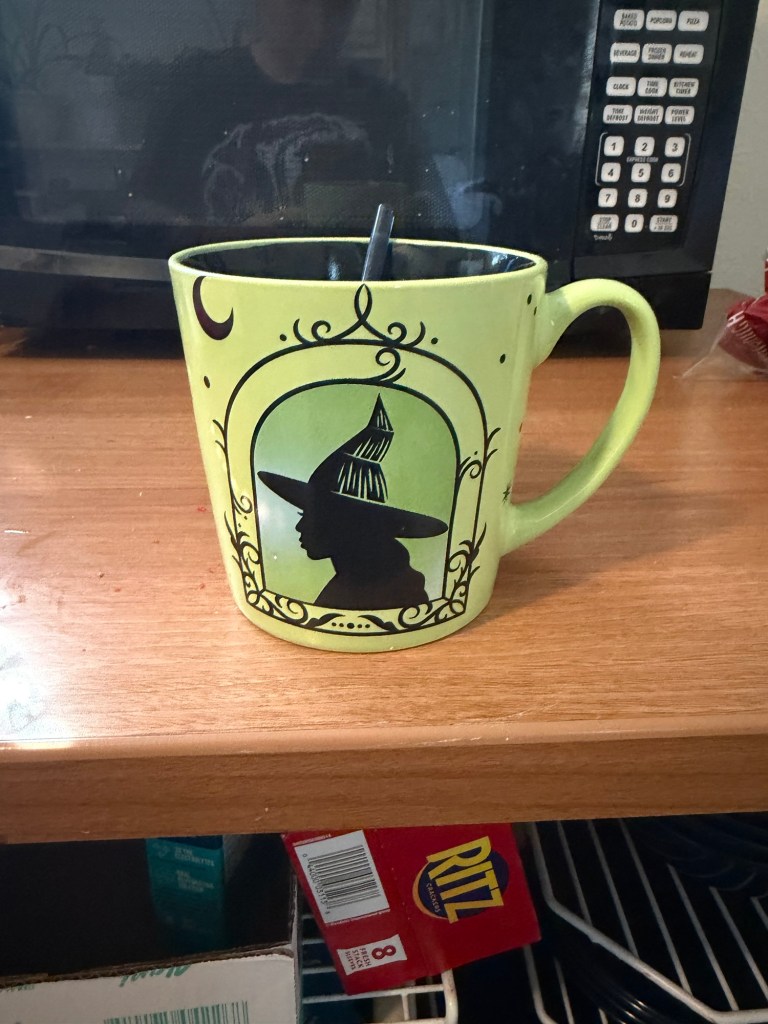
There isn’t a perfectly timed concert moment or something beautiful happening in the background.
It’s just a mug.
Sitting on my kitchen counter.
With a spoon sticking out of it.
If you didn’t know anything else, you could scroll right past this picture and never think twice about it.
But sometimes the pictures that look the most ordinary are holding things nobody else can see.
Today, while Doodoo was sleeping, I made myself a cup of tea.
Now, that part isn’t unusual.
I love tea.
If I have enough time in the morning, that’s usually what I reach for. All of my teas are caffeine-free, and there’s something about sitting down with a hot cup that I’ve always loved.
But this cup was a little different.
I didn’t make it just because I wanted tea.
I made it because I’m trying to have a baby.
And apparently, wanting something this badly finds its way into some really ordinary parts of your life.
The tea is Pink Stork’s fertility tea.
It has chaste tree berry and red raspberry leaf in it.
Does it work?
I have absolutely no idea.
😂
Am I willing to drink it anyway?
Absolutely.
Because that’s the thing about this fertility journey that I don’t think photographs very well.
A lot of it is invisible.
People see the obvious things.
The doctor appointments.
The conversations about treatment.
The prenatals sitting on the counter.
Eventually, hopefully, maybe one day—
a positive test.
But there’s a whole world happening between those moments.
The Googling.
The reading.
The wondering.
The vitamins.
The tea.
The little changes.
The things you try because somebody somewhere said they might help and you think:
Well…why not?
There’s a strange vulnerability in wanting something this badly.
Because suddenly even the smallest thing can feel connected to it.
You take the prenatal because the doctor told you to.
You make the tea because maybe.
You pay more attention to your body.
You start thinking about things you never used to think about.
You collect little pieces of possibility everywhere you can find them.
And none of those things come with guarantees.
That’s probably the hardest part.
I can do everything I’m supposed to do.
I can try the things that might help.
I can show up for appointments.
I can ask questions.
I can take the vitamins.
I can drink the tea.
And none of it allows me to skip ahead and see how this story ends.
So, for now—
I make the tea.
I sit with the uncertainty.
And I keep trying.
Maybe this cup is doing absolutely nothing except giving me something warm to drink.
That is entirely possible.
😂
But there was something about seeing it sitting there today that made me stop.
Because it didn’t look like much.
Just a green witchy mug on the counter.
But I knew what was inside it.
And more importantly—
I knew why I made it.
Hope doesn’t always look like some huge, beautiful moment.
Sometimes hope is incredibly boring.
Sometimes it comes in a vitamin bottle.
Sometimes it gets scheduled into a doctor’s appointment.
Sometimes it’s something you quietly research at night.
And sometimes—
it steeps in a mug while a little boy sleeps in the other room.
I think that’s what I like about this picture.
There is nothing extraordinary happening in it.
But there is an entire future I’m hoping for sitting just outside the frame.
And maybe that’s part of learning to look closer, too.
Noticing all the tiny things we do when we want something badly enough to keep believing it might happen.
Even when we don’t know what will work.
Even when there are no guarantees.
Even when, for today, hope looks like nothing more than a cup of tea.
Until next time,
—Destiny
P.S. What’s something small you’ve done because you were hoping for something much bigger?