Tag: personal reflection

  • Learning to Look Closer #18: Beyond First Impressions 📸

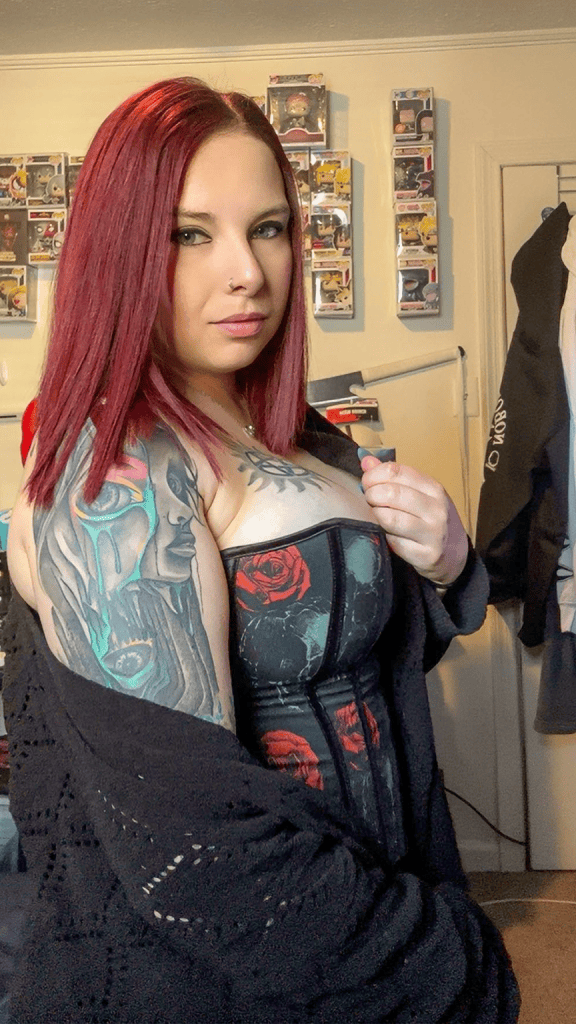
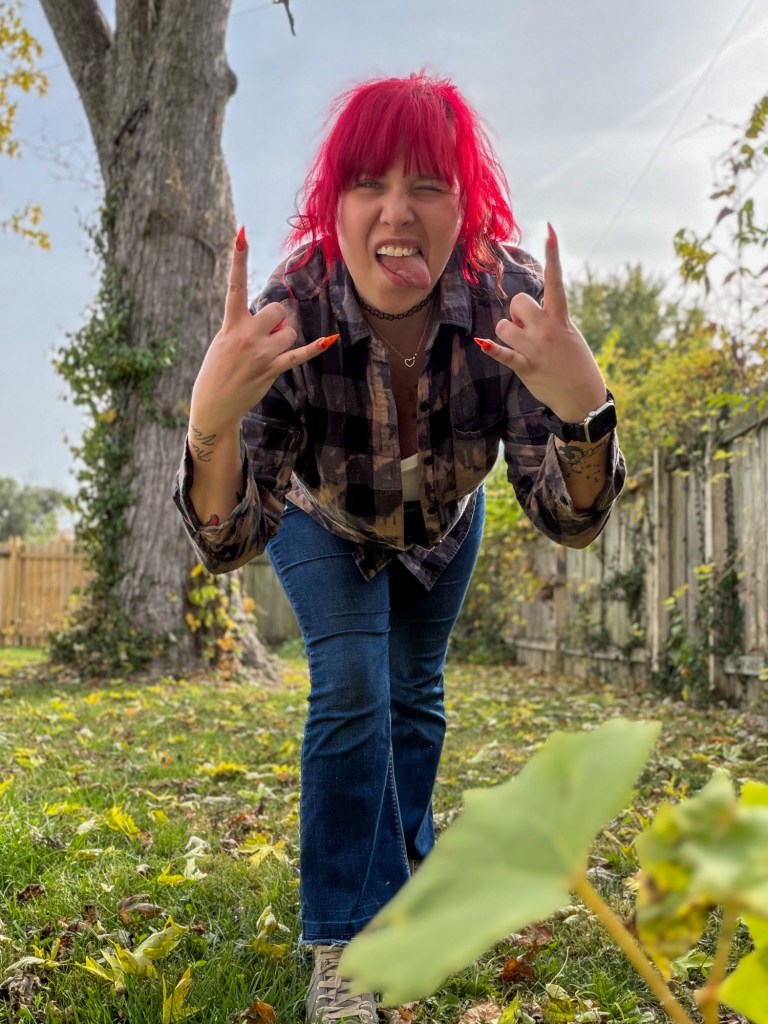
    Two photographs. One person. Two very different impressions.

    Before you read any further, I want you to look at these two photographs.
    Now, I want you to ask yourself something.

    What kind of person do you think you’re looking at?

    Maybe the first photograph makes you think I’m loud, rebellious, immature, or someone who doesn’t take much of anything seriously.

    Maybe the second makes you think I’m confident, intimidating, provocative, or someone who cares a little too much about her appearance.

    Maybe you love the photographs. Maybe you hate them. Maybe you wouldn’t think twice about either one.

    But here’s the interesting part.

    They’re both me.

    And neither one tells you very much about who I actually am.

    📸 What the Camera Shows

    Photography has this funny way of making a fraction of a second feel like an entire personality.

    One expression. One outfit. One pose.

    That’s all it takes for someone to decide what kind of person they’re looking at.

    We do it all the time, whether we realize it or not.

    We see someone covered in tattoos and make assumptions about their lifestyle. We see someone dressed conservatively and assume they’re traditional. We see someone smiling and decide they’re happy. We see someone with a serious expression and assume they’re unfriendly.

    But how much of that information did the photograph actually give us?

    And how much did we fill in ourselves?

    The camera captured what was in front of it.

    Our minds supplied the story.

    🖤 The Person Outside the Frame

    I have tattoos. I have piercings. I love dark clothing, unusual hairstyles, creepy things, and music that some people would probably describe as noise. 🤣

    I also love photography, writing, spending time with my family, and finding beauty in things other people might walk right past.

    I can be loud and ridiculous. I can be quiet and thoughtful. I can be opinionated, stubborn, sensitive, and incredibly sentimental.

    Sometimes I’m the woman sticking her tongue out at the camera.

    Sometimes I’m the woman posing in a corset.

    Sometimes I’m neither.

    And none of those versions cancels out the others.

    The problem isn’t that people notice our appearances. That’s human nature.

    The problem begins when we decide that what we’ve noticed is everything there is to know.

    💭 Beyond First Impressions

    This week’s posts have been exploring beliefs, perspectives, and the way we understand people who see the world differently than we do.

    And I think photography fits into that conversation beautifully.

    Because we don’t just make assumptions about someone’s clothing or personality.

    We do it with their beliefs, too.

    We hear that someone follows a particular religion, or doesn’t follow one at all, and suddenly we think we know what kind of person they are.

    We decide what they value, how they treat others, what they believe about the world, and sometimes even whether they’re worth getting to know.

    All from one little piece of information.

    That’s a lot like looking at a photograph and convincing yourself you know everything happening outside the frame.

    You don’t.

    Neither do I.

    And that’s okay.

    We aren’t supposed to know everything about someone the moment we meet them.

    We’re supposed to give ourselves the opportunity to learn.

    📷 Learning to Look Closer

    As a photographer, I’ve learned that what I leave outside the frame can be just as important as what I include.

    A photograph can tell a story, but it rarely tells the whole story.

    People are the same way.

    The woman in these photographs isn’t one personality or the other. She’s both, and a thousand other things you haven’t seen.

    And the next time you find yourself making assumptions about someone based on their appearance, their beliefs, or one little moment of their life, maybe ask yourself:

    Am I seeing this person for who they are, or am I seeing the story I’ve already decided to tell about them?

    Because sometimes, learning to look closer doesn’t mean seeing more.

    It means recognizing how much you still don’t know.

    Until next time,
    -Destiny 🖤

    P.S. For the record, I really am the girl who sticks her tongue out, throws up rock signs, and listens to music loud enough to concern the neighbors. 🤣 But I’m also the girl who cries over sentimental things, loves her family fiercely, and finds beauty in the smallest moments. Funny how two photographs can show you so much and still tell you so little. 🖤
  • 🖤 Between the Lines #13: To My Demons

    I think the scariest thoughts are rarely the loudest ones.

    The loud ones are easier to recognize.

    They sound wrong.

    Cruel.

    Obvious.

    You can point at them and say:

    That is not helping me.

    The quieter ones are harder.

    The ones that sound logical.

    Responsible.

    Realistic.

    The ones that know exactly which memories to pull out, which fears to touch, and which words will sound believable coming from your own voice.

    That’s what this poem is about for me.

    Not fighting some dramatic monster outside of myself.

    Living with the thoughts that know me well enough to sound like me.

    This is To My Demons.


    To My Demons

    You don’t knock.
    You never needed permission.

    You crawl in like smoke,
    settle into my lungs,
    make yourself at home
    inside the parts of me
    that are already tired.

    You speak softly.
    That’s how I know it’s you.

    You don’t threaten.
    You suggest.
    You remind.
    You replay everything
    I wish I could forget
    and call it self-awareness.

    You tell me I’m realistic.
    Prepared.
    Not naive like everyone else
    who still believes in light
    without conditions.

    You sound like me
    on my worst nights.
    You wear my memories
    like a second skin.

    I hate that.

    I hate how convincing you are.
    How you don’t need to shout
    to make me doubt
    whether staying is worth it.

    Some nights
    you sit beside me
    and count my failures
    like beads on a rosary.

    Some nights
    you tell me rest is dangerous.
    That hope is reckless.
    That peace is temporary
    and I should brace for the fall.

    You never push me.
    You don’t have to.

    You just wait
    until I’m tired enough
    to consider listening.

    And still—
    I wake up.

    Not because I want to.
    Not because I believe
    tomorrow will be better.

    I wake up because something in me
    refuses to hand you the last word.

    You hate that part of me.
    The quiet resistance.
    The way I keep breathing
    even when it feels pointless.

    You call it stubbornness.
    I call it survival.

    You can stay—
    because I know you will.

    But don’t confuse proximity
    with ownership.

    I am not cured.
    I am not fearless.
    I am not free of you.

    But I am still here.

    And that is the one thing
    you can never forgive me for.


    Between the Lines

    This poem makes the demons sound almost polite.

    And I think that is what makes them worse.

    They don’t crash through the door.

    They don’t scream.

    They don’t announce themselves as something dangerous.

    They already know where everything is.

    They’ve been there before.

    They know which memories hurt.

    Which fears still work.

    Which insecurities need almost no convincing at all.

    And they don’t have to sound like monsters.

    They just have to sound enough like me.


    “You don’t threaten. You suggest.”

    This might be the most important distinction in the entire poem.

    A threat is obvious.

    A suggestion can feel reasonable.

    The demons don’t say:

    Everything is hopeless.

    They say:

    Be realistic.

    They don’t say:

    Never trust anything good.

    They say:

    You’re just being prepared.

    They don’t say:

    Relive every painful thing that ever happened to you.

    They call it:

    Self-awareness.

    That’s the trick.

    They take fear and give it a respectable name.

    They take hypervigilance and call it wisdom.

    They take the expectation of pain and dress it up like preparation.

    And suddenly the thing hurting you sounds like the thing protecting you.

    That’s a dangerous voice to argue with.

    Especially when it sounds like your own.


    “You wear my memories like a second skin.”

    The demons in this poem don’t invent evidence.

    They use what already happened.

    That matters.

    Because fear gets a lot more convincing when it can point backward and say:

    See?

    See what happened last time.

    See what they did.

    See how badly that hurt.

    See why you shouldn’t relax.

    See why you shouldn’t trust this.

    See why peace is temporary.

    And the worst part is—

    sometimes the memories are completely real.

    The conclusion just isn’t always fair.

    Something happened before.

    That does not mean it has to happen again.

    Someone hurt you.

    That does not mean everyone will.

    You survived something terrible.

    That does not mean safety is a trick.

    But when your brain has receipts?

    It can make fear sound a whole lot like proof.


    “You just wait until I’m tired enough to consider listening.”

    I love this line because resistance takes energy too.

    Sometimes people talk about survival like it’s this huge, heroic act.

    Fighting.

    Winning.

    Standing tall.

    Refusing to break.

    But sometimes survival looks much less impressive from the outside.

    Sometimes you’re just tired.

    You don’t feel brave.

    You don’t feel hopeful.

    You don’t even necessarily believe tomorrow is going to be better.

    You just don’t make the decision tonight.

    That’s it.

    You keep going long enough to see another morning.

    And in this poem, that counts.

    It has to.

    Because there are nights when hope is too expensive.

    So the speaker doesn’t survive because she suddenly believes everything will be okay.

    She survives because something in her refuses to let the demons write the ending.


    “You call it stubbornness. I call it survival.”

    I really like that survival here is not pretty.

    It isn’t inspirational.

    There’s no dramatic music playing in the background.

    She is simply still here.

    And maybe stubbornness is underrated.

    Sometimes stubbornness is:

    No.

    You don’t get this.

    Not tonight.

    You can sit there.

    You can talk.

    You can replay every ugly memory you have.

    But you do not get the last word.

    There is something incredibly small about that kind of resistance.

    And incredibly powerful.


    “Don’t confuse proximity with ownership.”

    This is probably my favorite line in the second half.

    Because the poem does not end with the demons disappearing.

    That would be easier.

    It would also be dishonest.

    She says:

    You can stay—
    because I know you will.

    That isn’t surrender.

    It’s acknowledgment.

    There is a huge difference between saying:

    You exist.

    and saying:

    You own me.

    She isn’t cured.

    She isn’t fearless.

    She isn’t pretending the darkness packed a suitcase and moved out.

    It’s still there.

    But being near something does not mean belonging to it.

    Living with fear does not mean fear gets to make every decision.

    Having dark thoughts does not mean those thoughts get to define you.

    The demons can occupy space.

    They just don’t get the deed.


    Still Here

    I think that is where this poem ultimately lands.

    Not victory.

    Not healing wrapped up neatly with a bow.

    Not:

    I defeated my demons.

    Just:

    I am still here.

    And sometimes that is enough.

    There is something almost defiant about surviving without turning survival into something beautiful.

    Sometimes being alive does not feel triumphant.

    Sometimes it feels annoying.

    Messy.

    Exhausting.

    Stubborn.

    But the demons don’t get to choose what counts.

    They wanted the last word.

    They didn’t get it.

    Maybe tomorrow still won’t feel easy.

    Maybe the thoughts will still show up.

    Maybe peace will still feel temporary.

    But the poem ends with the one fact they cannot argue away:

    I am still here.

    And maybe that is the whole point.

    Until next time,

    — Destiny

    P.S. What’s something your fear has tried to convince you was “realistic” when it was really just fear talking? 🖤

  • 🖤 Between the Lines #12: Song of the Sirens

    There are some things you know are bad for you before you ever touch them.

    That doesn’t always stop you from wanting them.

    I think we like to imagine that once we’ve learned a lesson, we become immune to repeating it.

    Once you know what a red flag looks like, you’ll never walk toward one again.

    Once you’ve survived the fire, surely you’ll recognize the heat next time.

    Except people don’t really work like that.

    Sometimes you know exactly what something is—

    and it still sounds beautiful.

    That’s where this poem came from.

    Not from being unable to recognize danger.

    From recognizing it perfectly and having to decide whether you’re going to listen anyway.

    This is Song of the Sirens.


    Song of the Sirens

    He smiled like sin itself,
    and I forgot how to pray.

    Not because I stopped believing.

    Because some songs
    are louder than faith.

    They never tell you
    the Sirens don’t force anyone.

    They simply sing.

    The rest
    is a decision.

    I saw the rocks.

    I knew the stories.

    I knew how endings like this
    always ended.

    Bodies drifting.

    Dreams swallowed whole.

    Women like me
    mistaking hunger
    for destiny.

    Still—

    I stepped closer.

    There is something terrifying
    about wanting the thing
    you already know
    will undo you.

    Not because you’re foolish.

    Because loneliness
    has a remarkable way
    of making shipwrecks
    look like shorelines.

    His smile carried the same promise
    the sea always has.

    Come closer.

    You’ll finally understand.

    You won’t feel alone here.

    I almost believed him.

    Almost mistook
    being desired
    for being seen.

    Almost confused
    chemistry
    with safety.

    He smiled like sin itself,
    and somewhere in the distance
    the Sirens started singing.

    Not with voices.

    With possibility.

    With every version of my life
    that might have existed
    if I had ignored
    what my heart already knew.

    People think temptation
    looks like certainty.

    It doesn’t.

    It looks like curiosity.

    One more conversation.

    One more touch.

    One more reason
    to believe this time
    will be different.

    The ocean never asks
    for all of you at once.

    It takes you
    one step at a time.

    I stood at the water’s edge
    long enough
    to hear the music.

    Long enough
    to understand
    why sailors kept turning the ship.

    Long enough
    to know
    I wasn’t immune.

    Then I remembered—

    love had already taught me
    the difference
    between a lighthouse
    and a fire.

    One guides you home.

    The other only looks beautiful
    from far away.

    So I walked away.

    Not because the song stopped.

    It didn’t.

    I walked away
    because I finally understood

    that surviving

    sometimes sounds like

    leaving the music

    unfinished.


    Between the Lines

    This poem uses Sirens, but it isn’t really about Sirens.

    There’s no monster waiting on the rocks.

    No sailor tied to a mast.

    No literal song floating across the ocean.

    The Siren in this poem is possibility.

    It’s that dangerous little voice that asks:

    But what if?

    What if this one is different?

    What if I’m reading it wrong?

    What if I just stay a little longer?

    What if the thing that hurt me before could somehow become the thing that heals me now?

    And sometimes that question is enough to make us move closer to something we already know we should be walking away from.


    “They simply sing. The rest is a decision.”

    I really wanted this line in the poem because I didn’t want temptation to become something that happened to her.

    The Sirens aren’t dragging her into the ocean.

    She sees the rocks.

    She knows the stories.

    She understands exactly what could happen.

    And she still takes a step.

    That distinction matters.

    Because sometimes we talk about destructive patterns like we somehow lose all agency the second temptation appears.

    But there’s usually a space between hearing the song and reaching the rocks.

    Sometimes it’s tiny.

    Sometimes it’s painful.

    But it’s there.

    And that’s where the decision lives.


    “Loneliness has a remarkable way of making shipwrecks look like shorelines.”

    This is probably the line that sits closest to the center of the poem for me.

    Because loneliness changes perspective.

    Something doesn’t necessarily become safer just because you’re lonely.

    It can just start looking safer.

    Attention feels more meaningful.

    Chemistry feels more important.

    Being wanted starts feeling suspiciously similar to being understood.

    And suddenly something you would have recognized immediately from a distance begins looking like somewhere you could rest.

    That’s why the next lines matter too:

    Almost mistook
    being desired
    for being seen.

    Almost confused
    chemistry
    with safety.

    Those things are not interchangeable.

    Someone can want you without knowing you.

    You can have incredible chemistry with somebody who is terrible for you.

    Something can feel intense without being healthy.

    And sometimes learning that difference is expensive.


    Temptation doesn’t usually arrive screaming.

    I think we picture bad decisions as these huge dramatic moments.

    You stand at a crossroads.

    One path says GOOD IDEA.

    The other says THIS WILL RUIN YOUR LIFE.

    Then you knowingly choose disaster.

    😂

    Usually it’s much quieter than that.

    One more conversation.

    One more touch.

    One more reason
    to believe this time
    will be different.

    That’s how people end up farther into something than they ever planned to go.

    The ocean doesn’t ask for all of you at once.

    One step.

    Then another.

    Then another.

    Eventually you look behind you and realize the shoreline is much farther away than you thought.

    That part of the poem isn’t really about one person.

    It’s about patterns.

    The ways we negotiate with ourselves when we want something badly enough.

    The tiny permissions that become much bigger decisions.


    “I wasn’t immune.”

    I really like that she doesn’t walk away because she becomes stronger than the song.

    She doesn’t suddenly stop wanting it.

    She doesn’t stand at the water and think:

    Wow. I can’t believe I ever considered that.

    She understands why sailors turned their ships.

    She understands exactly why someone would keep listening.

    And she realizes she could too.

    There’s something more honest to me about that than pretending growth means temptation stops working.

    Sometimes growth is knowing:

    This could still get me.

    And making a different decision anyway.


    The lighthouse and the fire.

    love had already taught me
    the difference
    between a lighthouse
    and a fire.

    One guides you home.

    The other only looks beautiful
    from far away.

    This is the moment where the poem changes.

    Up until then, she is measuring the danger against desire.

    Then she remembers she has something else to compare it to.

    Not fantasy.

    Not possibility.

    Experience.

    She knows what it feels like when love is safe.

    And once you know that, intensity stops being quite as convincing.

    A fire can be beautiful.

    Warm.

    Mesmerizing.

    You can stare at it forever.

    That doesn’t mean you should walk into it.

    A lighthouse doesn’t ask you to burn.

    It helps you find your way home.


    Leaving the Music Unfinished

    The ending matters to me because the song never stops.

    I didn’t want it to.

    If the Sirens suddenly went silent, walking away wouldn’t mean very much.

    Of course she leaves if she no longer wants to stay.

    That isn’t the difficult choice.

    She leaves while she can still hear them.

    While possibility still exists.

    While some part of her still wonders what would happen if she took one more step.

    There’s no neat ending.

    No final conversation.

    No satisfying answer to every what if.

    She doesn’t stay long enough to learn how the story would have ended.

    And that’s the point.

    Sometimes we think closure means finishing something.

    Getting the answer.

    Having the conversation.

    Following it all the way through so we can finally know.

    But sometimes survival requires accepting that you are never going to know.

    Sometimes the safest ending is the one you deliberately refuse to finish.

    The song keeps playing.

    You just stop following it.

    Until next time,

    — Destiny

    P.S. Have you ever had to walk away from something even though part of you still wanted it? 🖤

  • 📸 Learning to Look Closer #15: What Still Grows Here

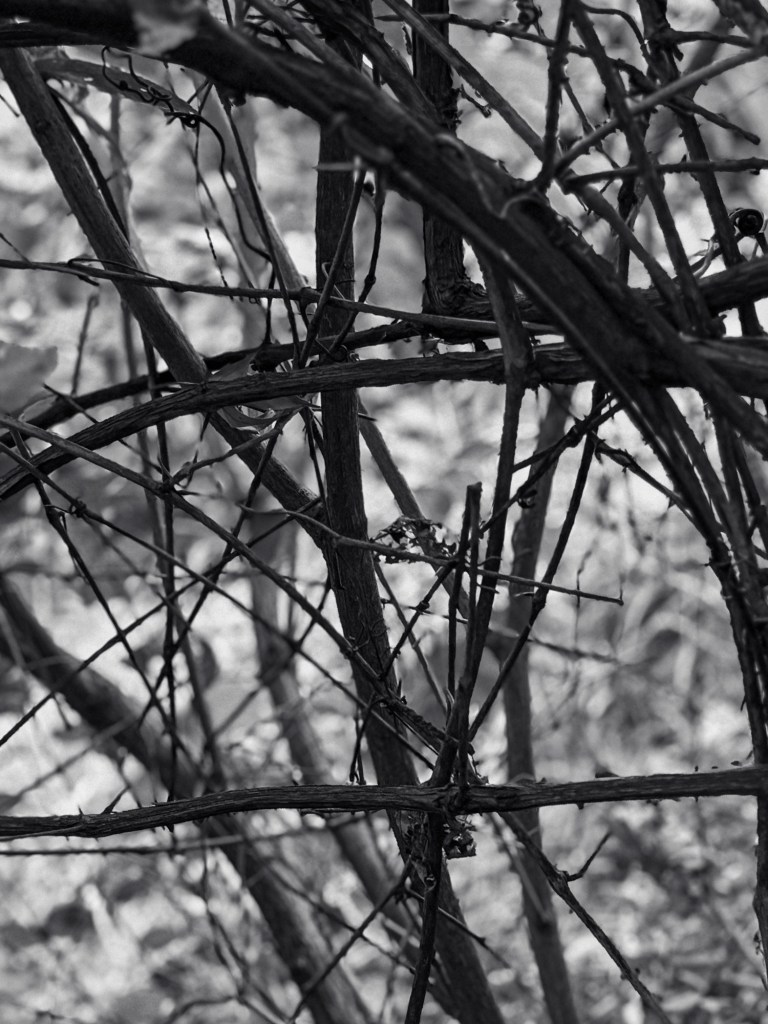
    At first, it looked dead.

    A mess of old vines.

    Twisted branches.

    Things crossing over each other so tightly I couldn’t tell what was still alive—

    and what had been gone for a long time.

    That was what made me stop.

    In black and white, the whole thing looks stripped down to bone.

    No color to soften it.

    No green to reassure you that something is still growing.

    Just shape.

    Shadow.

    Tangles.

    Old wood wrapped around older wood.

    Somewhere inside all of that, something is still alive.

    I think that’s what I like about it.

    Nature doesn’t wait for everything dead to disappear before it starts again.

    It grows around it.

    Through it.

    Over it.

    The old damage stays.

    The broken pieces stay.

    Sometimes the dead things become part of the structure holding the living ones up.

    There’s something very October about that.

    Not death exactly.

    The space between death and whatever comes next.

    The point where something has already ended, but hasn’t disappeared.

    Where decay and growth are touching.

    Where you can’t quite tell which one you’re looking at anymore.

    And maybe that’s why the picture feels a little unsettling.

    Nothing is clean.

    Nothing is finished.

    Nothing has politely stepped aside to make room for what comes after it.

    Everything remains tangled together.

    Which, if I’m being honest, feels a lot more truthful than the idea that we always leave old things neatly behind.

    Sometimes we don’t.

    Sometimes we grow around them.

    Sometimes they become part of us.

    Sometimes the thing you thought was dead is simply waiting somewhere beneath everything else.

    And sometimes—

    you have to look closer to figure out which is which.

    Until next time,

    — Destiny

    P.S. What’s something you thought was gone, only to realize part of it was still growing somewhere underneath? 🖤

  • 🖤 Between the Lines #11: What the Dead Keep

    I think one of the strangest things about grief is that you don’t always miss the huge moments first.

    Sometimes you miss the stupid little things.

    What flowers somebody hated.

    How slowly they drank their wine.

    The sound they thought was funny.

    The person you loved is gone, but Tuesday still happens.

    And I think that is really what this poem became about for me.

    Not refusing to let someone go.

    Not being unable to move on.

    Just the quiet, stubborn way love can keep making room for someone who is no longer physically there.

    Because there is a difference between accepting that someone died—

    and deciding that death gets to erase them.

    This is What the Dead Keep.


    What the Dead Keep

    Every night,

    someone leaves flowers
    on a grave

    whose name
    has long withered away.

    Not roses.

    She hated roses.

    He remembers that.

    Even now.

    Even after rain
    has eaten the letters
    from the stone

    and moss has filled
    what little remains.

    He brings lilies.

    Sometimes dahlias.

    Once,

    in the middle of winter,

    he walked three miles
    through snow

    with violets
    hidden beneath his coat

    so the frost
    wouldn’t touch them.

    By morning,

    they were frozen anyway.

    He came back
    the next night.

    He always comes back.

    The cemetery gate
    screams when he opens it.

    He never oils the hinge.

    She used to love
    that sound.

    Said it made the place
    feel haunted.

    He had laughed then.

    “It’s a cemetery.”

    She smiled.

    “Exactly.”

    Now,

    he would give anything

    to hear her laugh
    at him again.

    So every night,

    he kneels
    in the dirt.

    Pulls weeds
    from around the stone.

    Brushes dead leaves
    from her name.

    Runs his thumb
    through the shallow grooves

    as though touching
    the letters

    might somehow
    still count

    as touching her.

    Sometimes
    he talks.

    Nothing important.

    The neighbor
    finally cut down
    that awful tree.

    The roof leaks again.

    He burned dinner
    on Tuesday.

    The moon is full.

    He tells her
    the ordinary things

    because death
    already took
    everything else.

    He refuses
    to let it have

    Tuesday.

    Sometimes,

    he brings two glasses
    of wine.

    Pours hers
    into the earth.

    “You always drank too slowly.”

    The soil turns dark.

    He drinks alone.

    Years pass.

    The groundskeeper changes.

    Then changes again.

    Houses rise
    beyond the cemetery walls.

    Children become old enough
    to have children.

    People stop visiting
    the graves nearby.

    Photographs fade.

    Names disappear.

    Stone forgets
    what flesh once was.

    But every night,

    flowers.

    Fresh.

    Carefully cut.

    Placed beneath
    a name

    no living person
    seems to recognize.

    Eventually,

    people begin telling stories.

    A grieving husband.

    A ghost.

    A madman.

    A lover
    who cannot let go.

    They are wrong
    about one thing.

    He did let go.

    He let go
    of her hand

    the night
    it became too cold
    to hold him back.

    He let strangers
    carry her away.

    Let them close
    the coffin.

    Let dirt strike wood

    one handful
    at a time.

    He let go

    because the living
    are forced

    to do terrible things
    with their hands.

    But love—

    love was never buried.

    So tonight,

    he comes again.

    Slower now.

    His hands shake
    around a bundle
    of white lilies.

    He lowers himself
    beside her

    with more difficulty
    than he used to.

    His knees sink
    into wet earth.

    For a long time,

    he says nothing.

    Then he places
    the flowers down.

    Straightens each stem.

    Wipes a smear of mud
    from the stone.

    And rests his forehead
    against her name.

    “I’m tired, darling.”

    The cemetery
    does not answer.

    It never does.

    He smiles anyway.

    Small.

    Almost embarrassed.

    Like the young man
    who once stood
    on her doorstep

    holding flowers

    and trying desperately
    not to crush them.

    “Tomorrow, then.”

    He kisses
    two fingers

    and presses them
    to the stone.

    Then leaves.

    The gate screams
    behind him.

    Morning comes.

    The lilies remain.

    Then another night.

    And another.

    But no footsteps
    cross the cemetery.

    No hands
    clear the leaves.

    No voice
    complains about the weather.

    For the first time
    in sixty-three years,

    her grave

    is alone.

    Until spring.

    When the groundskeeper
    finds something strange.

    Two graves.

    Side by side.

    One stone
    so old

    its name has nearly
    disappeared.

    The other,

    new.

    And growing
    between them,

    where no one
    remembers planting anything,

    a cluster

    of white lilies.


    Between the Lines

    This poem looks like a ghost story.

    There’s an old cemetery.

    A screaming gate.

    A disappearing name.

    A man who comes every night for sixty-three years.

    Flowers growing between two graves at the end.

    But I don’t actually think this is a poem about ghosts.

    I think it’s about being remembered after the world has stopped remembering you.

    The stone is failing.

    Rain is eating the letters.

    Moss is filling the grooves.

    Eventually, nobody seems to know who the woman buried there even was.

    But he does.

    And not in some grand, romanticized way where she becomes perfect because she died.

    He remembers that she hated roses.

    That matters to me.

    He doesn’t bring her the flower people are supposed to bring the dead.

    He brings her flowers.

    Lilies.

    Dahlias.

    Violets he tries to protect from the snow even though they freeze anyway.

    He remembers her jokes.

    Her habits.

    The tiny things that made her a person.

    Death gets the body.

    Time gets the photograph.

    Weather eventually gets the name carved into stone.

    But he keeps the details.


    “He refuses to let it have Tuesday.”

    This might be my favorite part of the whole poem.

    Because grief is usually written around the enormous things.

    The funeral.

    The final goodbye.

    The empty side of the bed.

    The anniversary.

    But losing someone also means losing the person you would have told about Tuesday.

    The roof leaked.

    The neighbor finally cut down the tree.

    You burned dinner.

    Nothing important happened.

    And you still would have told them.

    He keeps bringing her the ordinary life she would have been part of.

    Death already took the things he couldn’t stop it from taking.

    He isn’t giving it the mundane stuff too.

    Not Tuesday.


    “A lover who cannot let go.”

    That is what people eventually decide he is.

    But they’re wrong.

    He did let go.

    Literally.

    And I think this is probably the hardest part of the poem for me:

    He let go

    because the living
    are forced

    to do terrible things
    with their hands.

    There is something cruel about how physical death is for the people left behind.

    Someone has to release the hand.

    Someone has to let strangers take the body.

    Someone has to close the coffin.

    Someone has to leave the cemetery.

    His continuing to love her afterward does not mean he failed to accept that she died.

    He knows she is dead.

    The poem never gives him an answer.

    “The cemetery does not answer. It never does.”

    He just doesn’t believe acceptance requires forgetting.

    And neither do I.


    “Tomorrow, then.”

    By the time he comes for the last time, he is old.

    His hands shake.

    His knees hurt.

    Everything around him has changed.

    But he is still carrying white lilies.

    Then, for a moment, he becomes that young man again—

    standing on her doorstep with flowers and trying not to crush them.

    I love that image because sixty-three years disappear for a second.

    Then he says:

    “Tomorrow, then.”

    And there isn’t one.

    Not for him.

    That hurts me more than some huge final goodbye ever could.

    Because most people don’t know when something is the last time.

    The last conversation.

    The last ordinary Tuesday.

    The last see you tomorrow.

    Sometimes you only realize afterward that tomorrow belonged to somebody else.


    And then there are the lilies.

    I deliberately don’t explain them.

    Maybe somebody planted them.

    Maybe they grew there naturally.

    Maybe it is coincidence.

    Maybe it is something else.

    I don’t really care.

    For sixty-three years, he carried flowers to her.

    Then he dies.

    And in spring, flowers grow between them.

    Not on her grave.

    Not on his.

    Between.

    I don’t need that ending to prove an afterlife.

    I just like the idea that after all those years spent crossing the distance between the living and the dead, the poem ends with something quietly growing in the space that separated them.


    What the Dead Keep

    Maybe that’s what we really keep when somebody dies.

    Not the person.

    We don’t get that choice.

    We keep fragments.

    Habits.

    Private jokes.

    Things they hated.

    Things they would have laughed at.

    The stupid ordinary details that don’t sound important until suddenly they are all you have left.

    The stone eventually forgets her.

    The world mostly does too.

    He doesn’t.

    And then eventually, he is gone as well.

    But for one spring—

    white lilies grow between them.

    Maybe nobody visiting that cemetery knows why.

    Maybe nobody remembers either of them.

    But something is still there.

    And maybe that is as close as any of us get to staying.

    Until next time,

    — Destiny

    P.S. If someone you loved were gone, what ordinary little thing about them do you think you’d be most afraid of forgetting? 🖤

  • 📸 Learning to Look Closer #14: The Thing I Wanted to Look Away From

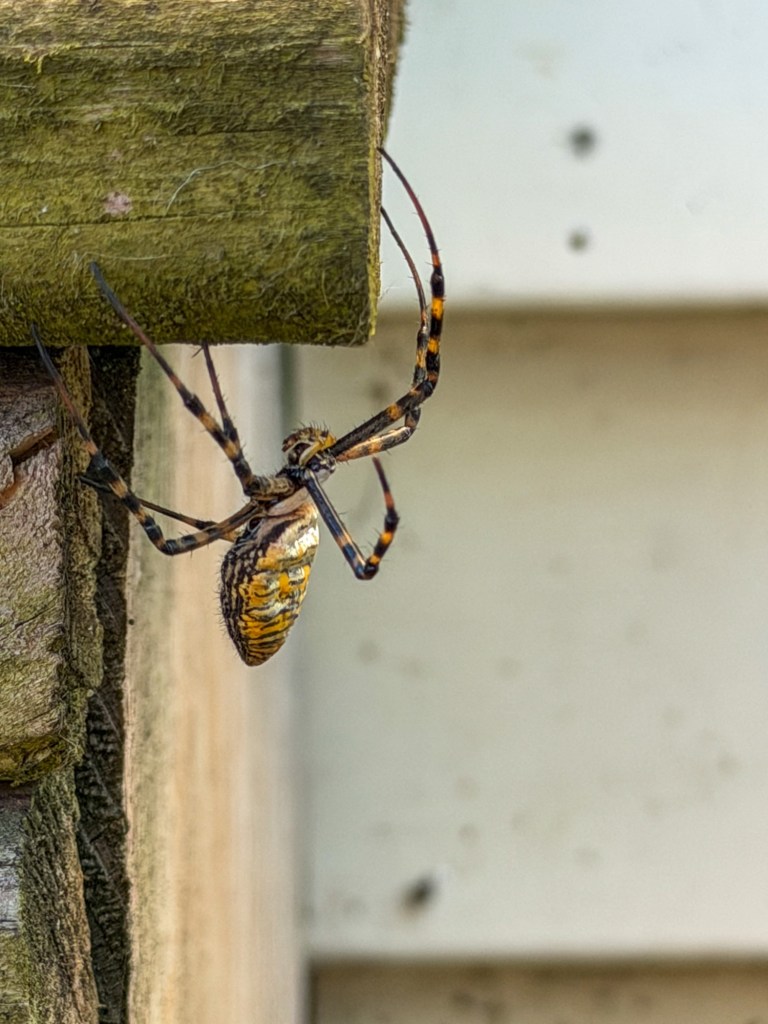
    I am terrified of spiders.

    And I don’t mean:

    “Ew. Spider.”

    I mean my heart races.

    My palms sweat.

    My breathing changes.

    My entire body goes into panic mode before the logical part of my brain has even had time to remind me that I am significantly larger than the thing currently ruining my day.

    So naturally—

    I took her picture.

    😂

    And somehow, out of all the pictures I could have taken of a spider I desperately wanted nowhere near me…

    she decided to pose.

    One leg stretched upward.

    The others perfectly angled.

    Body turned just enough to show off every stripe, every little patch of color, every horrifying hair on those ridiculously long legs.

    She looks like she knew exactly where the camera was.

    Which feels unnecessarily confident for something that almost made me leave my own backyard.

    But then I looked at the photo.

    Actually looked.

    And—

    damn it.

    She’s beautiful.

    I hate that.

    😂

    Her legs aren’t just black.

    They’re banded with orange and yellow.

    Her abdomen has this complicated pattern running across it that I never would have noticed if I hadn’t gotten close enough to take the picture.

    Even the little hairs on her legs—the part I find particularly offensive—catch the light.

    There is so much detail packed into something my brain normally reduces to one word:

    SPIDER.

    Danger.

    Nope.

    Get it away from me.

    And I think that’s the interesting part.

    Looking closer didn’t make me less afraid of her.

    I didn’t take the picture and suddenly become a spider person.

    Absolutely not.

    I still wanted distance.

    A lot of it.

    Preferably several zip codes.

    But for a minute, fear stopped being the only thing I could see.

    There was fear.

    And there was color.

    Pattern.

    Texture.

    Structure.

    Beauty.

    All occupying the exact same frame.

    I think sometimes we assume appreciating something means we have to stop being afraid of it.

    Maybe we don’t.

    Maybe two things can be true at once.

    She scared the absolute shit out of me.

    And—

    she is gorgeous.

    I can admit that.

    From over here.

    Very, very far away.

    😂🖤

    Maybe looking closer isn’t always about discovering that something wasn’t scary after all.

    Sometimes it’s just about noticing that fear wasn’t the whole story.

    Until next time,

    -Destiny

    P.S. Have you ever found something beautiful even though it scared you?

  • Between the Lines #10: The Siren Who Could Not Sing

    There are some poems that start with an idea.

    And then there are some that quietly become about something much bigger while you’re writing them.

    The Siren Who Could Not Sing started with a simple question:

    What happens to a siren who can’t sing?

    Not one whose voice was stolen.

    Not one who eventually discovers some hidden, magical song.

    Just—

    a siren who cannot do the one thing everyone says a siren is supposed to do.

    And the more I sat with that idea, the less this poem became about sirens.

    Because I think a lot of us know what it feels like to live inside an expectation we were never able to meet.


    The Siren Who Could Not Sing

    They knew something was wrong
    the first time I opened my mouth
    and the sea stayed still.

    No sailors turned their heads.

    No ships changed course.

    No man forgot
    the name of the woman
    waiting for him at home.

    Nothing happened.

    My sisters sang
    and entire oceans
    leaned closer.

    I sang—

    and heard only
    the small, broken sound
    of breath.

    A siren
    without a voice.

    There are cruelties
    even mythology
    doesn’t prepare you for.

    To be born
    with a name
    that promises something

    your body
    cannot give.

    They tried to teach me.

    Again.

    Again.

    Breathe deeper.

    Try harder.

    You aren’t trying.

    As though effort
    could grow music
    inside a throat
    that had never learned
    how to hold it.

    Eventually,

    they stopped asking me
    to sing with them.

    That hurt more.

    I would sit
    on the rocks
    and watch my sisters

    become everything
    we were created to be.

    Beautiful.

    Terrible.

    Unavoidable.

    Their songs
    crossed miles of water.

    Mine couldn’t cross
    my own lips.

    So I became useful
    in other ways.

    I watched the horizon.

    Counted ships.

    Collected what the ocean
    returned.

    Learned the names
    of constellations
    because stars
    never asked me
    to perform.

    Still,

    I hated them sometimes.

    My sisters.

    Not because
    they could sing.

    Because they never had
    to wonder

    who they would be
    if they couldn’t.

    Do you know
    what it does to you

    to lose something
    everyone insists
    is the reason
    you exist?

    You start believing
    absence
    is the same thing
    as failure.

    You start introducing yourself
    with an apology.

    You start thinking

    almost

    is another word
    for worthless.

    Then one night,

    a ship broke apart
    against the rocks.

    There had been no song.

    No seduction.

    Only a storm
    with no interest
    in who deserved
    to survive it.

    A sailor washed ashore.

    Alive.

    Barely.

    He looked at me
    and begged,

    “Please.”

    I opened my mouth.

    Nothing.

    Of course.

    So I didn’t sing.

    I pulled him
    from the water.

    Stayed beside him
    until morning.

    And when he woke,

    he didn’t ask
    why I had no song.

    He didn’t ask
    what kind of siren
    couldn’t lure a man
    to his death.

    He only said,

    “You saved me.”

    I had never heard
    those words before.

    All my life,

    I had been taught
    that a siren’s power

    was measured
    by how many people
    she could make
    follow her voice.

    No one ever told me

    there might be power
    in refusing
    to let someone drown.

    My sisters still sing.

    The sea still listens.

    Ships still tremble
    when their voices
    cross the water.

    And me?

    I am still silent.

    Some things
    do not grow back
    just because
    we finally understand
    their absence.

    But I no longer
    open my mouth
    and wait for music

    to prove
    I belong here.

    I am a siren.

    Not despite
    the silence.

    Not because of it.

    I simply am.

    And perhaps
    the cruelest thing
    they ever taught me

    was that the thing
    I was missing

    was the thing

    that made me

    whole.


    The part of this poem that sits heaviest with me isn’t actually the silence.

    It’s this:

    You aren’t trying.

    Because how many times do we say some version of that to people?

    Try harder.

    Push yourself.

    Everybody else can do it.

    You just need to practice.

    You just need to want it badly enough.

    As though effort is some magical currency we can exchange for ability.

    As though wanting something badly enough guarantees our bodies, our minds, or our circumstances will cooperate.

    Sometimes they don’t.

    And sometimes the cruelest thing you can do to someone who is already struggling is convince them that their inability is proof they didn’t try hard enough.

    The siren spends years believing there must be something wrong with her because everyone around her possesses the thing she is missing.

    Her sisters don’t even have to think about singing.

    They simply open their mouths—

    and the world responds.

    Meanwhile, she keeps trying to become something that was never going to happen.

    And I think comparison hurts the most when you’re comparing yourself to people who have never had to question the thing you’re fighting so hard to become.

    They don’t know what it feels like to sit on the rocks and watch.

    They don’t know what it feels like to be almost what everyone expected.

    They don’t have to wonder:

    Who am I if I can’t do the thing everyone says makes me who I am?

    That question is the real heart of this poem.

    Because we attach identity to things constantly.

    A good mother does this.

    A successful person looks like this.

    A strong person handles things this way.

    A woman should be this.

    A man should provide that.

    A writer should write like this.

    A body should be able to do that.

    And when we don’t fit whatever definition we were handed?

    We start shrinking ourselves around the missing piece.

    We introduce ourselves with an apology.

    We explain ourselves before anyone even asks.

    We start treating different like it means defective.

    That’s why I didn’t want her voice to magically appear at the end.

    I could have done that.

    The sailor could have awakened, she could have opened her mouth, and suddenly some beautiful song could have poured out.

    It would have been neat.

    Hopeful.

    Very fairy-tale.

    And I would have hated it.

    Because then the poem would still be saying she needed the song.

    She would simply have suffered long enough to finally earn it.

    No.

    She never sings.

    The thing she cannot do at the beginning is still something she cannot do at the end.

    Because sometimes healing doesn’t give you back what you lost.

    Sometimes acceptance doesn’t fix anything.

    Sometimes understanding yourself better does not magically change the thing you had to learn to live without.

    And you are still allowed to be whole.

    That’s why this part matters so much to me:

    I am a siren.

    Not despite
the silence.

    Not because of it.

    I simply am.

    Not despite.

    Because even that can become another kind of cage.

    Look how successful she became despite this.

    Look how strong she is despite that.

    Look what she accomplished even though she is missing something.

    Sometimes I think we become so obsessed with turning every difference into an inspirational story that we accidentally keep reinforcing the idea that there was something wrong with the person to begin with.

    She doesn’t need to become extraordinary because she cannot sing.

    She doesn’t need her silence to become a superpower.

    She doesn’t need to prove that losing one thing gave her something better.

    She is simply a siren.

    Full stop.

    And then there’s the sailor.

    All her life, she has been told that a siren’s power is measured by destruction.

    How many sailors turn their ships.

    How many men follow the voice.

    How many bodies the ocean takes.

    Then someone finally looks at her and says:

    You saved me.

    And suddenly the definition of power changes.

    Maybe the thing everyone around you values isn’t actually the thing that deserves to be valued.

    Maybe being good at what your world rewards doesn’t automatically make that thing good.

    Maybe you can spend your entire life believing you failed a test without ever stopping to ask:

    Who wrote the test?

    Our silent siren cannot lure sailors toward the rocks.

    But when one reaches them anyway—

    she pulls him out.

    And for the first time, she understands that she was measuring herself with a ruler she never chose.

    That might be my favorite thing hiding between these lines.

    She doesn’t finally become the siren everyone expected.

    She stops needing to.

    And I think there is an enormous difference between the two.

    Maybe becoming whole isn’t always about finding the missing piece.

    Maybe sometimes it’s realizing you were never a collection of missing pieces in the first place.

    Until next time,

    —Destiny

    P.S. Have you ever spent so much time trying to become who you thought you were supposed to be that you forgot to ask who you actually were?

  • 📷 Learning to Look Closer #13: A Cup of Hope

    This isn’t one of my photography pictures.

    There isn’t dramatic lighting.

    There isn’t some tiny bug I almost stepped over.

    There isn’t a perfectly timed concert moment or something beautiful happening in the background.

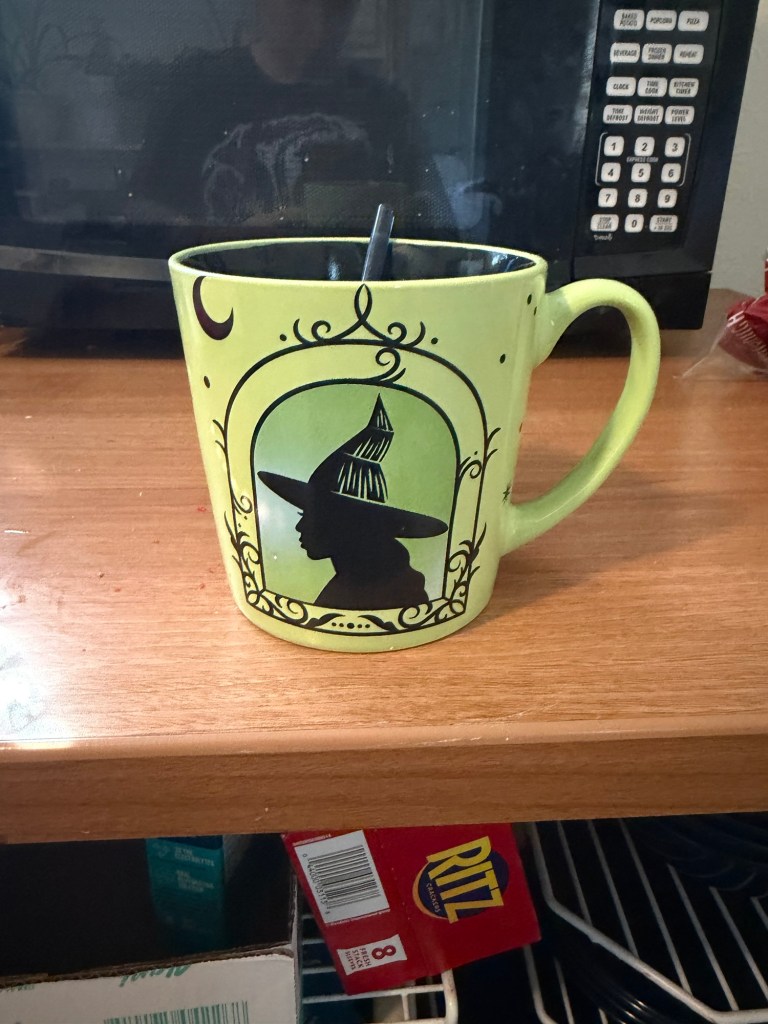
    It’s just a mug.

    Sitting on my kitchen counter.

    With a spoon sticking out of it.

    If you didn’t know anything else, you could scroll right past this picture and never think twice about it.

    But sometimes the pictures that look the most ordinary are holding things nobody else can see.

    Today, while Doodoo was sleeping, I made myself a cup of tea.

    Now, that part isn’t unusual.

    I love tea.

    If I have enough time in the morning, that’s usually what I reach for. All of my teas are caffeine-free, and there’s something about sitting down with a hot cup that I’ve always loved.

    But this cup was a little different.

    I didn’t make it just because I wanted tea.

    I made it because I’m trying to have a baby.

    And apparently, wanting something this badly finds its way into some really ordinary parts of your life.

    The tea is Pink Stork’s fertility tea.

    It has chaste tree berry and red raspberry leaf in it.

    Does it work?

    I have absolutely no idea.

    😂

    Am I willing to drink it anyway?

    Absolutely.

    Because that’s the thing about this fertility journey that I don’t think photographs very well.

    A lot of it is invisible.

    People see the obvious things.

    The doctor appointments.

    The conversations about treatment.

    The prenatals sitting on the counter.

    Eventually, hopefully, maybe one day—

    a positive test.

    But there’s a whole world happening between those moments.

    The Googling.

    The reading.

    The wondering.

    The vitamins.

    The tea.

    The little changes.

    The things you try because somebody somewhere said they might help and you think:

    Well…why not?

    There’s a strange vulnerability in wanting something this badly.

    Because suddenly even the smallest thing can feel connected to it.

    You take the prenatal because the doctor told you to.

    You make the tea because maybe.

    You pay more attention to your body.

    You start thinking about things you never used to think about.

    You collect little pieces of possibility everywhere you can find them.

    And none of those things come with guarantees.

    That’s probably the hardest part.

    I can do everything I’m supposed to do.

    I can try the things that might help.

    I can show up for appointments.

    I can ask questions.

    I can take the vitamins.

    I can drink the tea.

    And none of it allows me to skip ahead and see how this story ends.

    So, for now—

    I make the tea.

    I sit with the uncertainty.

    And I keep trying.

    Maybe this cup is doing absolutely nothing except giving me something warm to drink.

    That is entirely possible.

    😂

    But there was something about seeing it sitting there today that made me stop.

    Because it didn’t look like much.

    Just a green witchy mug on the counter.

    But I knew what was inside it.

    And more importantly—

    I knew why I made it.

    Hope doesn’t always look like some huge, beautiful moment.

    Sometimes hope is incredibly boring.

    Sometimes it comes in a vitamin bottle.

    Sometimes it gets scheduled into a doctor’s appointment.

    Sometimes it’s something you quietly research at night.

    And sometimes—

    it steeps in a mug while a little boy sleeps in the other room.

    I think that’s what I like about this picture.

    There is nothing extraordinary happening in it.

    But there is an entire future I’m hoping for sitting just outside the frame.

    And maybe that’s part of learning to look closer, too.

    Noticing all the tiny things we do when we want something badly enough to keep believing it might happen.

    Even when we don’t know what will work.

    Even when there are no guarantees.

    Even when, for today, hope looks like nothing more than a cup of tea.

    Until next time,

    —Destiny

    P.S. What’s something small you’ve done because you were hoping for something much bigger?